
Call or Text : +1 (440) 613-9487 Or Place your order directly on our website an agent will contact you immediately concerning your order. All bulk orders payment terms we accept bank wire transfer or bank deposite.
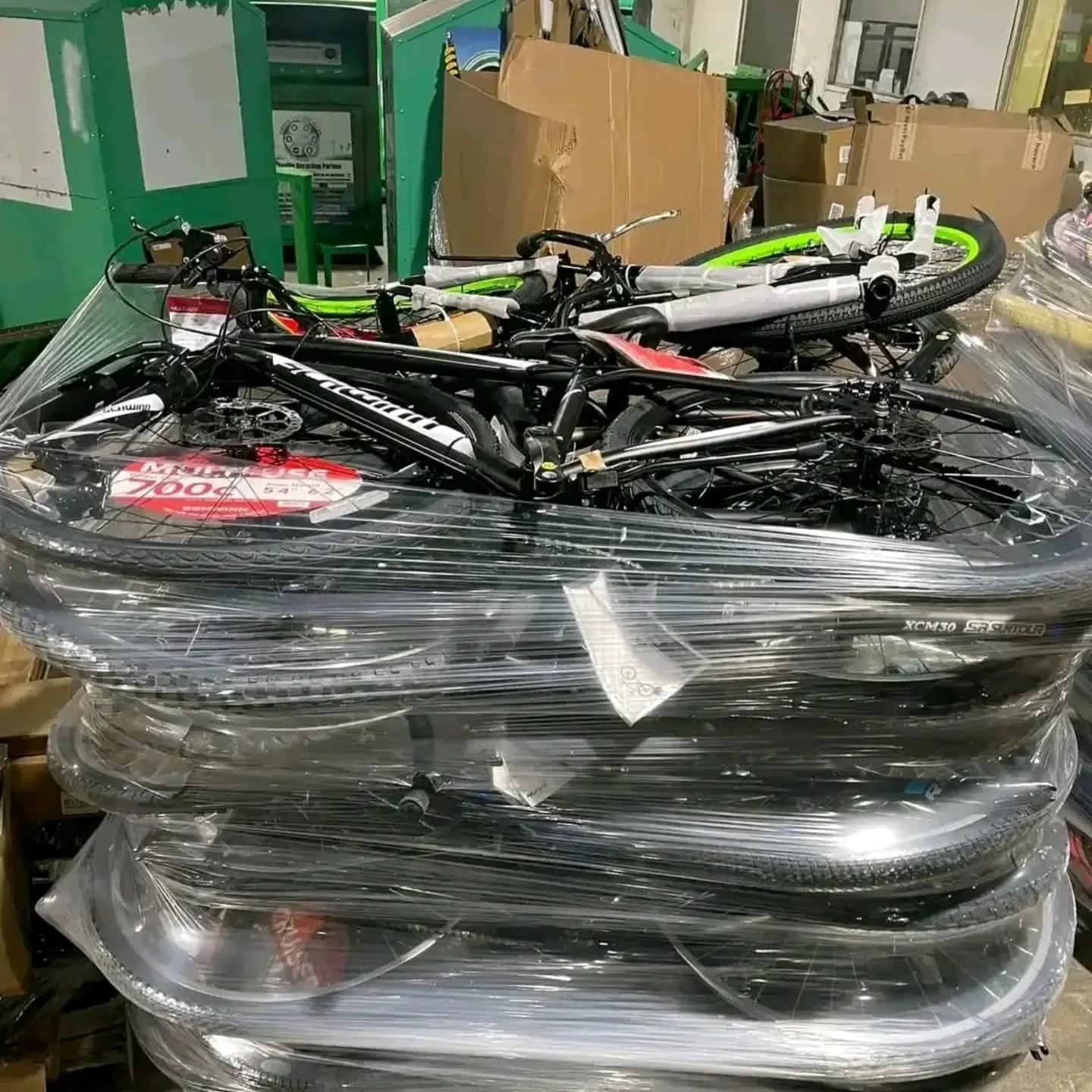
$550.00
Shop bicycle pallets for sale at competitive wholesale prices. Explore bulk bicycles for retailers, resellers, and distributors seeking quality inventory and liquidation deals across the USA.
Wholesale bicycle pallets for resale – $550 per pallet with 15 bicycles. Each pallet includes a mix of adult and kids’ bikes in different sizes.Our bicycle pallets feature 5 bicycles sized 24 inch and up, 5 sized 20 inch, and 5 sized 18 inch and below. Loads may include customer returns, shelf-pull, or overstock merchandise, giving resellers affordable access to high-demand bicycles. Perfect for retailers, online sellers, and wholesalers, these pallets provide excellent value and steady resale opportunities.
Finding reliable bicycle pallets for sale can help retailers, online sellers, discount stores, and independent resellers expand their inventory and reach customers looking for affordable bicycles. Purchasing bicycles in bulk provides businesses with an opportunity to source multiple units through a single transaction, explore different bicycle categories, and build a product selection that meets various customer needs.
Through wholesale bikes by the pallet, businesses can explore inventory that may include adult bicycles, children’s bikes, mountain bikes, casual bicycles, and assorted models. Depending on the supplier, pallets may contain new overstock merchandise, discontinued models, customer returns, or liquidation inventory. Understanding the contents and condition of each pallet is essential before committing to a wholesale purchase.
Whether you operate a physical bicycle shop, a general merchandise store, an ecommerce website, or a discount retail business, buying bicycles by the pallet can be a practical inventory sourcing option. However, a successful purchase requires careful supplier verification, realistic cost calculations, and an understanding of the products your customers are most likely to buy.
This comprehensive guide explains how bicycle pallets work, the types of inventory available, how to evaluate wholesale suppliers, and what businesses should consider when purchasing bicycles for resale.
Bicycle pallets are bulk shipments containing multiple bicycles or bicycle-related products assembled for commercial sale. The exact quantity and assortment depend on the supplier, product dimensions, packaging method, and type of inventory being offered.
Some pallets contain identical bicycle models, while others include mixed styles, colours, sizes, and brands. Certain lots may consist of boxed bicycles requiring assembly, whereas others may contain returned or previously handled products that need inspection before resale.
Businesses searching for bicycle pallets should establish whether the advertised lot includes complete bicycles, partially assembled units, damaged products, accessories, or spare parts. This distinction affects both the cost of preparing the merchandise for sale and the experience customers can expect.
Purchasing bicycles in bulk can help businesses increase inventory availability while reducing the need to source every unit individually. Depending on the supplier and the size of the order, pallet purchasing may also provide opportunities to negotiate bulk pricing.
Common advantages include:
These benefits depend on the actual inventory and the supplier’s terms. A large pallet is not automatically a profitable purchase. Buyers should evaluate the condition, completeness, transportation expenses, storage requirements, and likely resale demand before ordering.
The bicycle market includes several product categories, each serving different customers and business needs. Choosing the right assortment helps retailers avoid purchasing inventory that does not match their target audience.
Mixed bicycle pallets contain a selection of bicycles that may differ by style, size, colour, model, or brand. Depending on the supplier, a pallet could include casual bicycles, mountain bikes, children’s bicycles, and other standard bicycle types.
Mixed inventory can benefit retailers that want to offer customers several options without purchasing a separate pallet for every category. It can also help online sellers test demand across different bicycle styles.
However, mixed pallets require careful evaluation. Ask for a product manifest when available, and confirm the approximate quantity of each type. If the supplier cannot provide a detailed breakdown, consider the additional risk of receiving an assortment that may not match your customers’ preferences.
Bulk adult bicycles can include standard bicycles intended for commuting, recreation, fitness, or everyday transportation. Depending on the supplier, available models may include hybrid bicycles, road-style bikes, cruisers, and other adult-sized options.
Retailers should pay attention to frame size, wheel size, intended riding conditions, braking systems, and assembly requirements. These details influence which customers the bicycles suit and how they should be described in product listings.
A pallet containing several sizes may appeal to a broader customer base, but buyers should confirm the actual size distribution before purchasing.
Children’s bicycles wholesale offers inventory opportunities for retailers serving families and customers shopping for younger riders.
Available products may include smaller bicycles, beginner models, and different wheel sizes designed for different stages of development. Buyers should verify the age or height guidance provided by the manufacturer rather than relying solely on general product labels.
Safety is especially important when selling children’s bicycles. Check the condition of brakes, wheels, handlebars, pedals, and other essential components. Ensure the bicycles meet applicable safety requirements in the intended market, and do not sell units with unresolved safety defects.
Mountain bikes wholesale can appeal to customers interested in outdoor recreation, trails, and general-purpose cycling.
Depending on the pallet, products may vary in frame material, suspension configuration, wheel size, gearing, and braking systems. Buyers should confirm these specifications rather than assuming every bicycle marketed as a mountain bike is suitable for the same terrain.
Retailers should also distinguish between bicycles designed for casual riding and those intended for more demanding conditions. Accurate product descriptions help customers choose suitable products and reduce avoidable returns.
Discount bicycles wholesale refers to bicycle inventory offered at reduced bulk prices compared with the supplier’s regular pricing or other comparable offers.
Discounted merchandise may include overstock, discontinued models, surplus inventory, or customer returns. The reason for the reduced price matters because it can affect product condition, available accessories, warranty coverage, and resale value.
Before purchasing, compare the total delivered cost with the likely selling price of the bicycles in their actual condition. A low acquisition price may not provide good value if units require expensive repairs or replacement components.
Bicycle liquidation stock generally refers to bicycles sold through liquidation or surplus inventory channels. These products may come from excess inventory, discontinued product lines, retail returns, warehouse clearances, or other commercial stock disposal programmes.
Liquidation inventory can create purchasing opportunities for resellers, but the merchandise may vary significantly in condition and completeness.
Some pallets contain unused bicycles in their original cartons. Others may include opened boxes, assembly returns, missing accessories, cosmetic damage, or products requiring repairs. Buyers should confirm the condition of the specific lot rather than assuming every bicycle is new and ready for immediate sale.
Bicycle overstock pallets may contain merchandise that retailers or distributors have more of than they currently need. Overstock products can include discontinued colours, older models, seasonal inventory, or unused stock from previous buying cycles.
For retailers, overstock may provide access to products at negotiated prices. However, an older model is not necessarily in high demand simply because it is offered at a discount.
Check the model specifications, availability of replacement components, packaging condition, and likely customer interest. If the bicycles require special parts or accessories, verify that those items remain available before purchasing a large quantity.
Before purchasing liquidation inventory, ask the supplier for as much product information as possible.
Important questions include:
A clear inventory description reduces uncertainty and helps buyers estimate the cost of preparing the products for resale.
A dependable bicycle wholesale supplier should provide clear product information, transparent pricing, realistic delivery estimates, and written purchasing terms.
Supplier reliability is particularly important when purchasing large quantities of bicycles because transportation and storage costs can be substantial. A poorly described shipment can create additional inspection, assembly, repair, and customer service expenses.
Before placing an order, check the supplier’s business identity, contact details, available trading history, and customer feedback where accessible.
Ask for a written quotation that identifies the product category, quantity, condition, total cost, and shipping arrangements. Verify the payment recipient and retain documentation of the agreed terms.
Be cautious when a seller refuses to answer basic questions, provides inconsistent inventory information, or pressures you to pay immediately without supplying reasonable order documentation.
Bicycles often arrive in cartons requiring assembly. Depending on the product, the shipment may require additional components, tools, adjustments, or professional assembly before the bicycle is ready for use.
Confirm whether pedals, handlebars, wheels, reflectors, brakes, and other necessary components are included as applicable. If the products have been returned or previously assembled, ask whether they have been inspected.
Do not assume that boxed merchandise is automatically complete or safe to sell.
Bicycles can occupy considerable space, particularly when pallets contain large cartons or partially assembled units. Before ordering, determine whether your warehouse or retail premises can accommodate the delivery.
Request information about pallet dimensions, shipment weight, unloading requirements, and estimated delivery costs. If the bicycles are being imported, account for applicable taxes, customs procedures, and import charges.
Businesses researching Where to buy bicycle pallets for sale can compare bicycle wholesalers, liquidation companies, surplus inventory suppliers, business-to-business marketplaces, and distributors that offer bulk quantities.
Each source has different purchasing terms and inventory characteristics. A traditional wholesaler may offer more consistent product specifications, while a liquidation supplier may provide mixed or changing assortments.
When comparing available offers, consider the following factors:
The best purchasing decision is the one that balances cost, condition, demand, and operational requirements.
Wholesale bicycle pallets for retailers and resellers can provide an opportunity to purchase multiple units for physical stores, online shops, and general merchandise businesses.
Retailers may display assembled bicycles in a showroom, while online sellers may list boxed models for shipment or local collection. Each sales channel has different requirements for storage, product presentation, packaging, and delivery.
Bicycles for retailers should be selected according to the store’s target customers and available product range.
A shop serving commuters may prioritise standard adult bicycles, while a family-oriented retailer may need children’s bicycles in several sizes. Businesses targeting outdoor enthusiasts may focus on mountain bikes or other specialised categories.
Review local demand and competitor pricing before selecting a pallet. The goal is to stock bicycles that customers want rather than purchasing large quantities simply because the initial price appears attractive.
Bikes for resale businesses can provide an inventory source for independent resellers, ecommerce sellers, and companies specialising in liquidation merchandise.
Resellers should estimate the time and labour required to inspect, assemble, photograph, list, store, and dispatch each bicycle. These operational expenses can significantly affect the final profit margin.
For mixed pallets, organise the inventory into clear categories as soon as it arrives. Record product models, sizes, condition, and any missing components so that pricing and stock management remain accurate.
Businesses looking to Buy bulk bicycles by the pallet should first establish their target quantity, budget, and resale plan.
Request the total number of units and confirm whether the advertised quantity represents complete bicycles or includes parts, accessories, or damaged products. If a manifest is available, review it before committing to the purchase.
For a first order, consider starting with a quantity that your business can inspect and store comfortably. A manageable purchase allows you to assess supplier reliability and customer demand before making larger commitments.
Bicycle pallets for discount stores may provide inventory for businesses serving customers who prioritise affordability.
Discount retailers may focus on standard bicycles, selected adult models, children’s bicycles, and suitable overstock merchandise. However, a low purchase price does not eliminate the need to check product safety, completeness, and market demand.
Mixed bicycles pallets for discount stores can offer several product categories in one shipment. A mixed assortment may include different bicycle sizes, styles, and colours, depending on the supplier.
This variety can help retailers offer more choice, but it also creates additional work. Different models may require separate product descriptions, price points, assembly procedures, and storage arrangements.
Ask for the expected product mix and identify any units that may require repairs or additional parts. If the pallet contains products that cannot be safely sold, factor those units into your financial assessment rather than treating every bicycle as saleable inventory.
Affordable wholesale bikes in bulk should be evaluated using total acquisition cost and realistic resale potential.
Calculate the cost of the pallet, shipping, applicable taxes, unloading, inspection, assembly, repairs, storage, and delivery to customers. Divide the total cost by the number of bicycles that are actually suitable for resale.
For example, if a pallet costs £1,200 including delivery and contains 40 complete bicycles that are suitable for resale, the average acquisition cost is £30 per bicycle. This is an illustrative calculation, not a current market quotation or a guarantee of profit.
The actual margin will depend on selling prices and additional operating expenses.
Bulk bicycle inventory for online resellers can help ecommerce businesses expand their catalogue and reach customers searching for different bicycle categories.
Online sellers should provide accurate specifications, clear photographs, and detailed descriptions. Include information about frame size, wheel size, assembly requirements, included components, and the bicycle’s condition where applicable.
Strong product listings should answer common customer questions before a purchase is made.
Use clear photographs of the actual bicycle or accurately representative product images. State whether the bicycle is boxed, partially assembled, or ready for inspection. Disclose cosmetic damage, missing accessories, or other known issues.
Avoid unsupported claims about performance, suitability, or safety. Make sure product specifications match the manufacturer’s documentation and applicable requirements.
Bicycles may require larger packaging than many other retail products. Shipping costs can vary according to carton dimensions, shipment weight, delivery distance, and carrier requirements.
Online resellers should compare shipping options and establish whether the products will be delivered boxed or assembled. If customers are responsible for final assembly, provide the relevant manufacturer instructions and make that requirement clear before purchase.
Businesses should also plan for returns and damaged shipments. Appropriate packaging and clear delivery terms can help reduce disputes and unexpected costs.
Bicycle liquidation pallets for resale businesses can provide access to surplus, returned, or discontinued bicycle inventory.
These purchases may be suitable for businesses experienced in inspecting products and managing mixed-condition merchandise. However, liquidation stock often involves greater uncertainty than a clearly specified wholesale order.
Do not base your financial calculations exclusively on the total number of units advertised. Instead, estimate how many bicycles will be complete, safe, and commercially suitable for resale.
If the shipment contains returned products, allow for inspection and potential repairs. Any bicycle with unresolved safety defects should not be offered for use until the problem has been appropriately addressed.
Some bicycles may need replacement components, adjustments, or assembly before they can be sold. Verify the availability and cost of necessary parts, especially if the pallet includes older or discontinued models.
Where required, use qualified bicycle mechanics to inspect or assemble products. This is particularly important for brakes, steering, wheels, and other safety-critical components.
Once the shipment arrives, record each bicycle’s model, size, condition, and completeness. Separate ready-to-sell units from products requiring inspection or repair.
Accurate records make it easier to calculate the true cost per saleable unit and identify which bicycle categories generate the strongest demand.
Pallets of bicycles for small businesses can provide an opportunity to expand product offerings without negotiating individual purchases for every unit.
However, the size of the order should match the business’s financial resources, storage capacity, and expected sales volume. Large shipments can tie up working capital and create storage challenges if the bicycles take longer than expected to sell.
Wholesale bicycles for retail stores should be selected according to the shop’s customer base and operational capabilities.
A specialist bicycle shop may prefer consistent models and sizes, while a general merchandise store may be comfortable with a mixed assortment. Retailers should also consider whether they can provide assembly support, product advice, and appropriate after-sales service.
Before purchasing, research competing offers and confirm that the expected retail prices leave sufficient room for expenses and profit.
Small businesses can reduce purchasing risk by following a structured process:
This process makes it easier to evaluate whether a larger follow-up order is justified by actual results.
Businesses searching for Where to find bulk bicycle liquidation stocK should investigate established liquidation suppliers, bicycle wholesalers, surplus inventory businesses, and reputable business-to-business marketplaces.
Start by identifying suppliers that clearly describe their inventory and provide verifiable contact information. Ask whether the merchandise consists of unused overstock, discontinued models, customer returns, or uninspected stock.
Compare several offers using consistent criteria, including unit count, condition, product mix, shipping expenses, and total landed cost.
Be especially cautious when a supplier advertises premium bicycles at unusually low prices without providing model information or credible documentation. Confirm product authenticity where relevant and avoid making payment until the order terms and supplier details have been verified.
They can be suitable for beginners who understand the risks of bulk inventory purchases. Start with a manageable quantity, verify the supplier, inspect the available product information, and calculate all acquisition and preparation costs before ordering.
Yes. Mixed pallets may contain different bicycle styles, sizes, colours, and models. The exact assortment varies by supplier, so ask for a manifest or detailed description when available.
No. Liquidation stock may include unused overstock, discontinued merchandise, open-box products, customer returns, or uninspected units. Always verify the condition of the specific lot.
Add the purchase price, shipping, taxes, unloading, assembly, inspection, repair, storage, and other relevant costs. Divide the total by the number of bicycles suitable for resale, then compare that cost with realistic selling prices after operating expenses.
Many wholesalers and liquidation suppliers serve businesses of different sizes, although minimum quantities and purchasing terms vary. Ask whether smaller lots are available if a full pallet exceeds your budget or storage capacity.
Check the bicycle’s completeness and condition, including brakes, wheels, steering, tyres, and other essential components. Follow the manufacturer’s assembly and inspection guidance, and ensure the product complies with applicable safety requirements before selling it.
Finding reliable bicycle pallets for sale can help retailers, online resellers, discount stores, and small businesses source bicycles in bulk and expand their product ranges. From adult bicycles and children’s models to mountain bikes, mixed assortments, and liquidation inventory, wholesale purchasing offers several options for businesses serving different customers.
The key to making a sound purchase is evaluating the entire transaction. Verify the supplier, confirm the quantity and condition of the bicycles, inspect the product mix, and calculate shipping, storage, assembly, and repair expenses before committing to an order.
Whether you need mixed bicycle pallets for a discount store or consistent inventory for a specialist retail business, choose products that match your customers and operational capabilities. Careful sourcing, accurate product descriptions, appropriate safety checks, and realistic financial planning can help make wholesale bicycle purchasing a sustainable part of your resale strategy.
WhatsApp us
Get 10% off orders of $200 or more when you choose Zelle, Cash App, or Chime during checkout.
How it works: Your discount is automatically applied after you choose an eligible payment method at checkout.
Minimum product subtotal: $200. Credit-card orders remain at standard listed price. One promotion per order.
Reviews
There are no reviews yet.