
Call or Text : +1 (440) 613-9487 Or Place your order directly on our website an agent will contact you immediately concerning your order. All bulk orders payment terms we accept bank wire transfer or bank deposite.
$10,000.00
Shop amazon liquidation pallets inventory at competitive prices. Find bulk customer returns, overstock, and liquidation merchandise for resale and wholesale.
✅ Ships within 1–3 business days.
✔ 26 pallets per truckload
📧 Tracking information will be emailed once your order ships.
Amazon liquidation pallets are bulk lots of merchandise that are sold through liquidation channels rather than being offered through traditional retail. These lots can contain overstock, customer returns, warehouse-damaged inventory, and other merchandise that has moved out of the normal retail cycle. For entrepreneurs, online sellers, discount-store operators, and wholesale buyers, liquidation can provide a way to acquire inventory in larger quantities and potentially resell individual products at competitive prices.
The important thing to understand is that not every liquidation pallet is the same. Amazon’s official U.S. liquidation marketplace, operated through B-Stock, currently offers business buyers access to Amazon inventory in categories including home goods, apparel and footwear, media, consumer electronics, groceries, and more. The marketplace identifies inventory types such as overstock, customer returns, and warehouse-damaged merchandise.
That variety is what makes an Amazon pallet attractive to experienced resellers. One pallet may contain products from a relatively narrow category, while another may include a mixed selection. Some lots are manifested, meaning the buyer receives information about the expected contents, while other liquidation opportunities can be less predictable.
For someone entering the liquidation business, the goal shouldn’t simply be to find the cheapest pallet. The goal is to understand the merchandise, calculate the true landed cost, evaluate the condition, and determine whether the inventory has a realistic resale market.
The attraction is straightforward: buying inventory in bulk can potentially lower the acquisition cost per unit. Instead of purchasing individual retail products at full price, a reseller can acquire a larger lot and then separate, test, clean, photograph, list, and sell the items individually.
This model can work particularly well when the buyer already has established sales channels. An eBay seller, for example, may have the infrastructure to list dozens of individual products. A discount store may prefer to price inventory aggressively and move it quickly. An online retailer may bundle related products together.
However, liquidation is not risk-free. Amazon’s official U.S. marketplace explicitly states that orders can have shortages, may be canceled when a significant portion cannot be fulfilled, and may take up to 28 days after payment to ship under its standard marketplace terms.
That means successful liquidation buying requires planning rather than impulse purchasing.
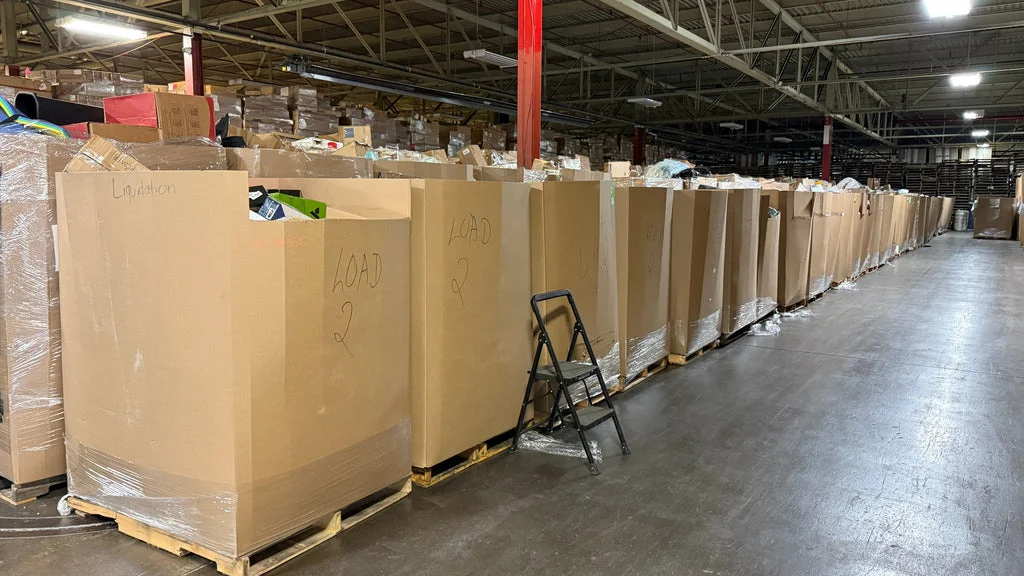
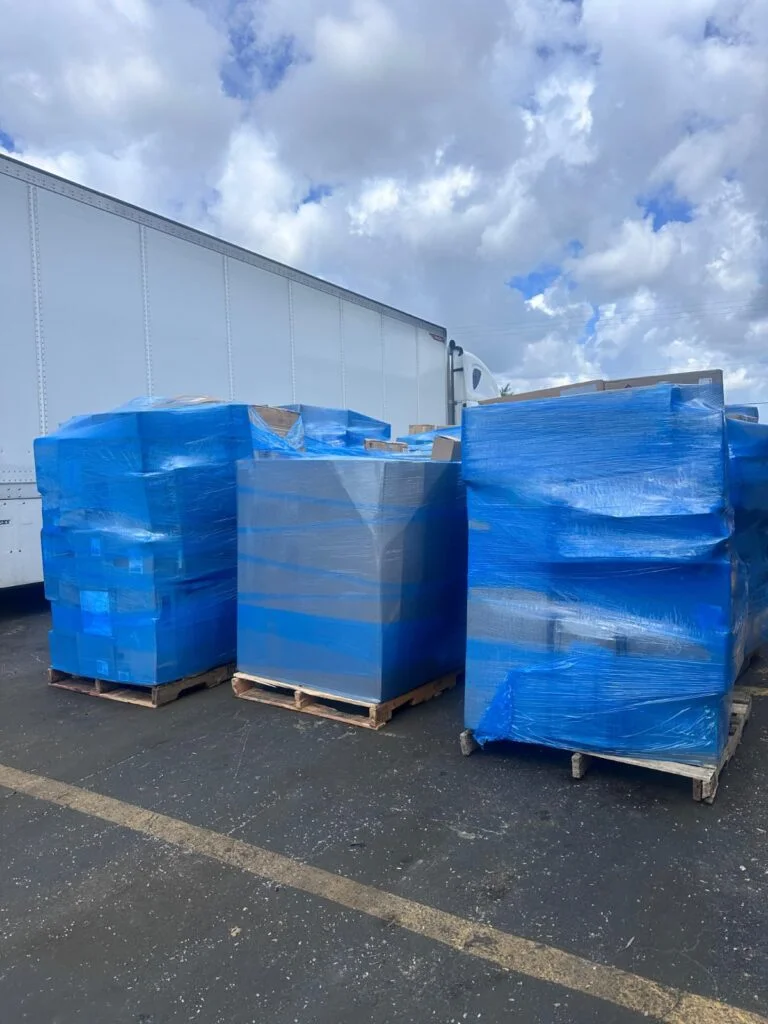
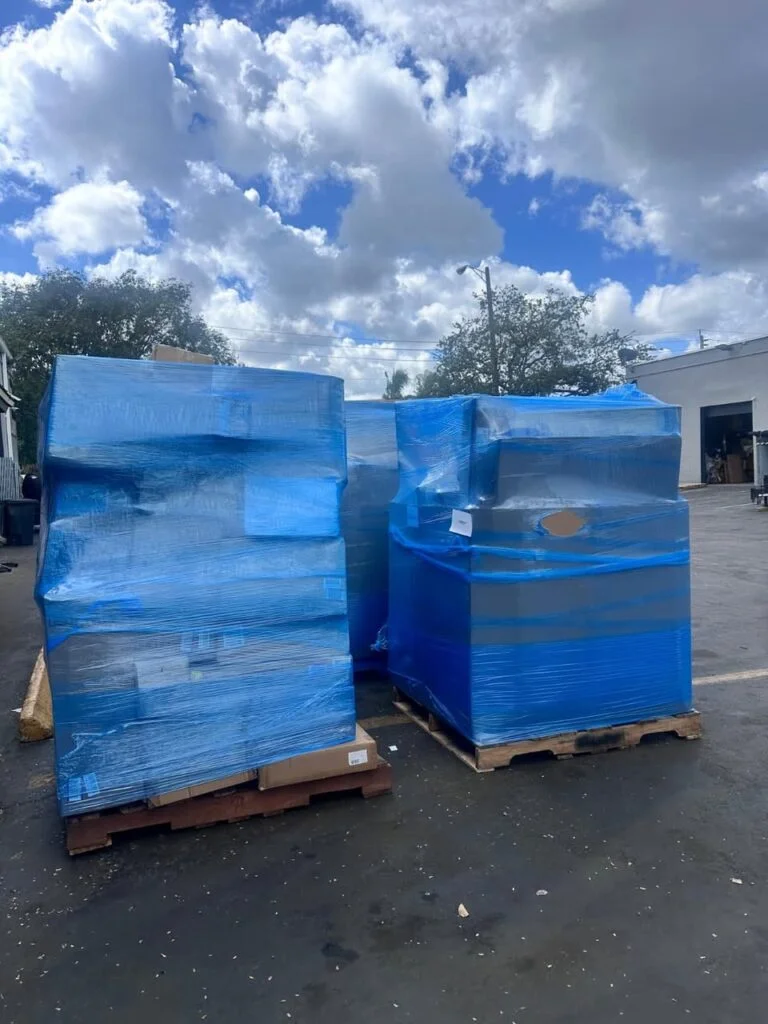
Amazon LPN HPC Truckloads (26 Pallets per Load) are one of the most in-demand liquidation options for serious resellers, bin store owners, and bulk buyers looking for consistent, high-volume inventory.
These truckloads come directly from major Amazon return streams and include LPN (License Plate Number) merchandise, meaning items are individually tracked but sold unprocessed and raw — allowing you to unlock maximum profit margins. If you are exploring different inventory types, you can also learn more about Amazon truckload liquidation here.
Each load includes approximately 26 pallets stacked up to 5ft high, packed with a wide variety of high-demand products. This makes it ideal for bin stores, flea market sellers, warehouse buyers, and online resellers looking for larger inventory quantities. Businesses purchasing truckloads often combine inventory with Amazon bulk pallets to increase category variety.
This is one of the most consistent and repeat-purchase truckloads across the Southeast, Midwest, and East Coast due to the strong resale potential and product mix.
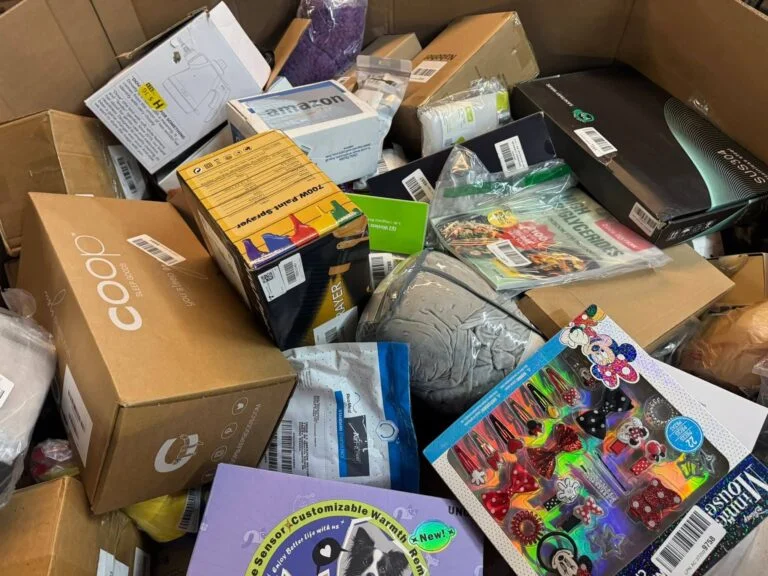
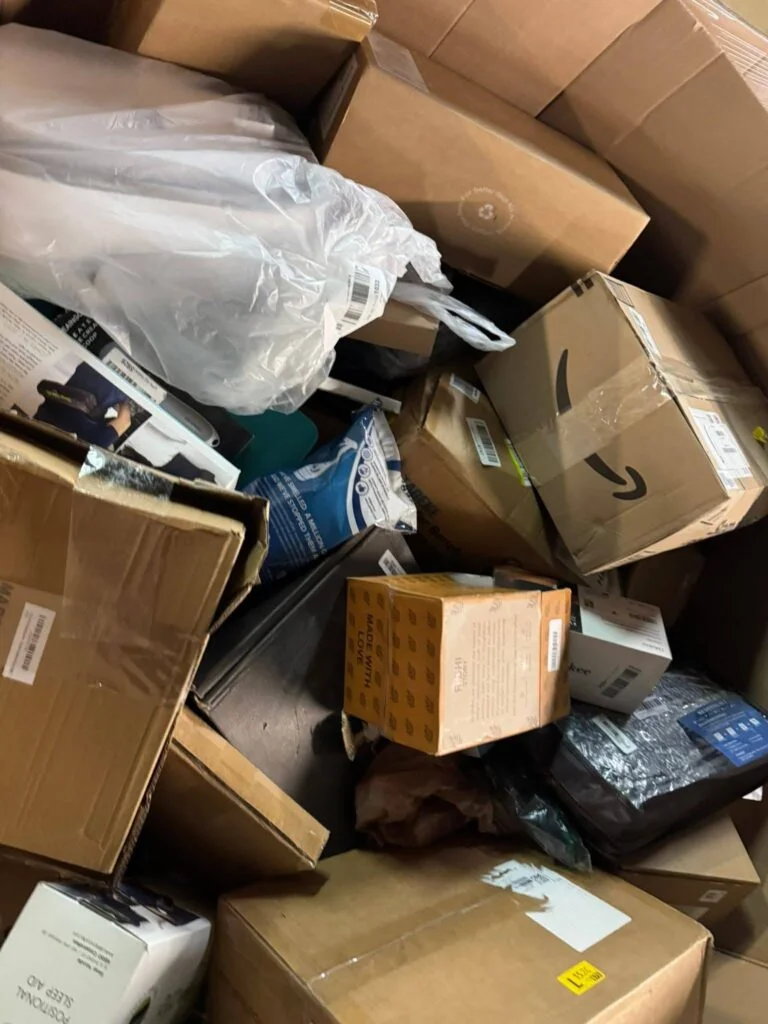
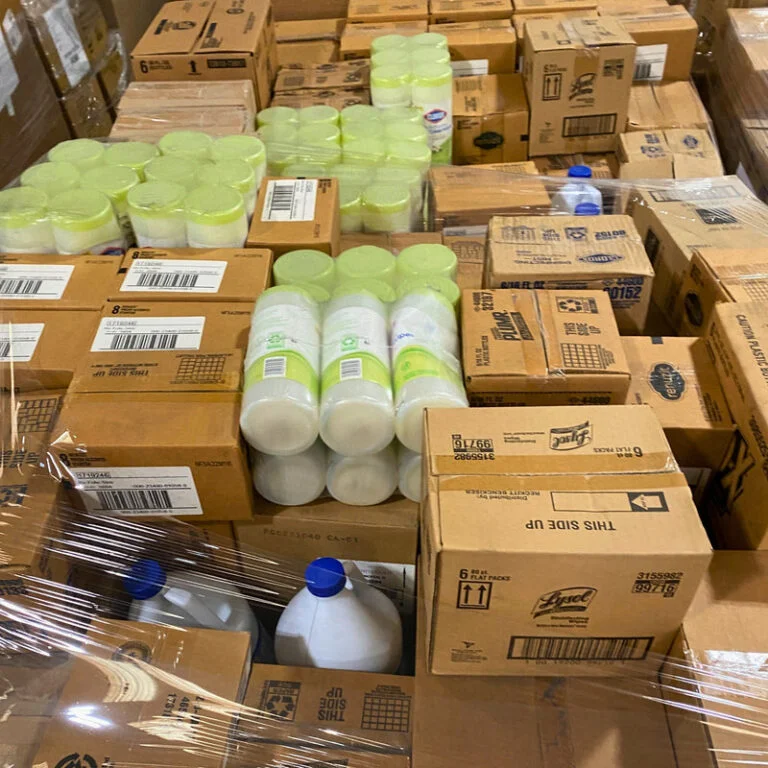
You can expect a diverse inventory that may include:
Electronics & accessories
Home goods & kitchen items
Tools & hardware
Toys & general merchandise
Clothing & small appliances
Because these are unprocessed loads, buyers often receive inventory at lower cost compared to sorted merchandise — creating stronger resale opportunities for experienced buyers working with Amazon bulk liquidation pallets
Manifested options are available upon request, giving you flexibility based on your buying preference.
Many buyers looking for LPN inventory also browse Amazon warehouse pallets and Amazon warehouse pallets for sale when comparing wholesale inventory sources.
Nationwide shipping available — contact us with your ZIP code for a full delivered quote.
If you are new to LPN inventory, you can also read our guide explaining what comes inside Amazon return pallets before purchasing truckload quantities.
If you’re looking to scale your resale business or stock your bin store with high-volume inventory, this Amazon LPN truckload is a proven choice. Many buyers begin with smaller loads and later expand into Amazon return pallets or larger wholesale programs.
✔ 26 pallets per truckload
✔ Unprocessed Amazon LPN liquidation pallets
✔ High-profit resale potential
✔ Ideal for bin stores & bulk resellers
✔ Mixed general merchandise from Amazon
✔ 5ft tall stacked pallets
✔ Consistent supply available weekly
✔ Manifested option available upon request
✔ Nationwide delivery available
Amazon LPN truckloads are commonly purchased by:
Businesses looking to expand inventory quantities can also request pricing for Amazon truckload pallets for sale.
Q: What does LPN mean?
A: LPN stands for License Plate Number, used by Amazon to track returned merchandise and inventory movement.
Q: Are the items new or used?
A: Inventory may include customer returns, overstock merchandise, shelf pulls, and mixed-condition products.
Q: Can I get a manifest?
A: Yes. Manifested truckloads may be available depending on inventory supply.
Q: Who is this best for?
A: Bin stores, resellers, warehouse buyers, exporters, and bulk liquidation businesses.
Q: Do you offer delivery?
A: Yes. We ship nationwide. Buyers searching for inventory locally can also explore buy Amazon return pallets near you
Shoppers sometimes confuse an Amazon outlet, an Amazon sale, and liquidation inventory. They are related to discounted merchandise but represent different purchasing models.
An Amazon sale generally refers to retail merchandise offered to consumers at a reduced price. An outlet-style shopping experience can also involve discounted products intended for individual shoppers.
Liquidation pallets, by contrast, are bulk inventory lots intended for resale or other business purposes. The products may include returns or overstock rather than simply being brand-new retail merchandise offered at a temporary discount.
This distinction matters because expectations are different. Someone buying a normal discounted retail item generally expects a specific product in a defined condition. A liquidation buyer must evaluate the condition and composition of the entire lot.
| Buying Method | Typical Buyer | Inventory | Main Advantage |
|---|---|---|---|
| Amazon sale | Consumer | Individual retail products | Convenient purchase |
| Outlet-style shopping | Consumer/reseller | Discounted individual products | Lower retail pricing |
| Liquidation pallet | Reseller/business | Bulk inventory | Potentially lower unit acquisition cost |
| Truckload liquidation | Established reseller | Large-volume inventory | Scale |
| Wholesale pallet | Business/reseller | Bulk merchandise | Volume purchasing |
Understanding this difference will help you choose the purchasing model that fits your business.
If you’re researching how to buy Amazon return pallets, begin with the source. The official Amazon Liquidation Auctions marketplace on B-Stock is a business-to-business marketplace that gives qualified U.S. buyers access to Amazon liquidation inventory. The current application requirements include a valid reseller certificate, and the U.S. marketplace is limited to buyers in the lower 48 contiguous states.
The basic process involves creating an account, submitting the required business information, reviewing available listings, and bidding or purchasing according to the terms of the particular listing.
Don’t assume that every listing has identical conditions. The marketplace itself recommends reviewing the individual auction title and description because inventory may be categorized as overstock, customer returns, or warehouse damaged.
Before placing a bid, evaluate the listing carefully. Look at the quantity, category, condition, location, estimated shipping, and manifest information. If the listing contains a large number of products, calculate the potential value at the unit level instead of relying solely on the stated retail value.
A disciplined buyer should examine:
The goal is to determine your maximum purchase price before the auction becomes competitive.
Amazon Return Pallets can contain products that customers previously purchased and subsequently returned. A return doesn’t automatically mean the product is defective. It can have many causes, including changed preferences, ordering the wrong size, damaged packaging, or simply deciding that the item wasn’t needed.
At the same time, buyers should never assume every return is ready for immediate resale.
Some products may require inspection, testing, cleaning, repackaging, or repair. Others may be missing accessories. This is why experienced liquidation buyers budget for processing costs.
The official Amazon liquidation marketplace identifies customer returns as one of its inventory types.
For a reseller, the processing stage is part of the business model. The purchase isn’t complete when the pallet arrives. That’s when the real work begins.
Once a pallet arrives, create a systematic process. Separate inventory into categories such as new, open-box, tested, incomplete, damaged, and unsellable.
Electronics should be tested carefully. Apparel should be inspected for stains, damage, and missing tags. Tools should be checked for functionality and included accessories. Home goods should be examined for broken components.
A spreadsheet or inventory-management system can make this process much easier.
Record the purchase cost, shipping cost, processing expense, product condition, expected sale price, actual sale price, platform fees, and profit. After several pallets, this data will tell you which categories actually make money.
Large-scale buyers may encounter listings described as an Amazon LPN Truckload or Amazon Return Truckloads. These are substantially larger purchasing opportunities than a single pallet.
The acronym LPN is commonly associated with Amazon’s internal-style inventory identification labels, but buyers should not assume that every listing using “LPN” has identical merchandise or conditions. The exact listing description and manifest should always be reviewed.
A truckload can dramatically increase both opportunity and risk. More inventory means greater potential revenue, but it also requires more capital, warehouse space, labor, transportation planning, and resale capacity.
B-Stock’s broader marketplace confirms that liquidation opportunities can range from individual pallets to full truckloads.
An Amazon LPN Truckload – 26 Pallets listing should be evaluated as a large-volume business purchase rather than an oversized version of a single pallet.
Twenty-six pallets can represent a substantial amount of inventory. Before buying a truckload of this size, calculate whether you have sufficient:
A forklift or appropriate unloading arrangement may also be necessary. Amazon’s official U.S. liquidation shipping information states that buyers are responsible for unloading trucks and recommends a loading dock or forklift for many shipments.
The term pallet liquidation makes the purchase sound simple, but the winning bid is only one part of the total expense.
Suppose you purchase a pallet for $1,000. If freight costs $250 and you spend another $150 on sorting, testing, cleaning, packaging, and supplies, your actual acquisition cost is $1,400.
If the pallet contains 100 sellable products, your average cost becomes $14 per sellable unit—not $10.
This is why serious liquidation businesses calculate landed cost.
Use this basic formula:
Total landed cost = purchase price + buyer fees + freight + processing expenses
Then:
Net profit = sales revenue − marketplace fees − shipping/fulfillment − total landed cost
For example, if your total landed cost is $1,500 and the inventory eventually generates $3,000 in net sales after marketplace fees and shipping, your business generated approximately $1,500 in profit before other overhead.
This is much more meaningful than saying the pallet had a “$5,000 retail value.”
Retail value is not the same as resale value.
People searching for pallets for sale have several potential options, including official liquidation marketplaces, regional liquidators, wholesale distributors, liquidation warehouses, and local resale businesses.
For buyers specifically looking for Amazon inventory, the official Amazon Liquidation Auctions marketplace is an important place to research because it provides direct access to Amazon liquidation listings through B-Stock.
The broader B-Stock marketplace also offers liquidation inventory from multiple retailers and manufacturers, with opportunities ranging from individual pallets to truckloads.
If you search for liquidation pallets near me or pallet liquidation near me, local suppliers can sometimes provide an advantage because you may be able to inspect merchandise, reduce freight expenses, and pick up inventory yourself.
However, local availability varies significantly by location.
Searching for wholesale pallets near me can be useful when transportation costs are a major concern. A nearby liquidation warehouse may offer pickup, reducing the need for LTL freight.
Ask local sellers whether they provide:
A physical warehouse can also give you a better understanding of what you’re buying, although inspection policies vary.
If you want to buy pallets, don’t begin by deciding how much you are willing to spend. Begin by determining what the merchandise is worth to you.
Research current resale prices on the platforms where you intend to sell. Don’t rely entirely on original retail pricing. A product that once sold for $100 may only have a realistic secondary-market value of $35 today.
Also consider how quickly the merchandise sells. A product that produces a $50 margin but takes six months to sell may be less attractive than a product that generates a $20 margin and sells within a week.
This is where inventory turnover becomes critical.
Manifested inventory provides more information about what you’re buying. An unmanifested lot provides less certainty and therefore requires a different risk calculation.
B-Stock’s current Amazon marketplace provides listing information and notes that lot sizes vary.
If you’re new to liquidation, manifested inventory can make financial planning easier. Experienced buyers may be comfortable with greater uncertainty when the purchase price justifies the risk.
An Amazon pallet sale may be structured as an auction or another type of listing. In an auction, the goal isn’t simply to win. The goal is to win at a price that still leaves room for profit.
Set a maximum bid before the auction gets competitive.
If your analysis says the pallet is worth $1,200 to your business, don’t suddenly bid $1,500 simply because you have already invested time researching it.
Emotional bidding is one of the easiest ways to destroy liquidation margins.
The official Amazon Liquidation Auctions marketplace also uses extended bidding rules. According to its FAQ, bids placed during the final five minutes can extend an auction by several minutes.
Understanding the auction mechanics helps you plan rather than react.
If you’re specifically searching for Amazon liquidation pallets near me, consider both local liquidation warehouses and online marketplaces that ship to your area.
Local purchasing can reduce transportation costs, but online purchasing may provide greater selection. The best option depends on your location, available warehouse space, and purchasing volume.
For local pickup, ask whether the pallet is actually stored at the advertised location. Some businesses market products locally but arrange fulfillment from another warehouse.
Always confirm:
Once you understand individual pallets, moving into wholesale pallets can help you scale. Instead of buying random merchandise, you can focus on categories where you already have proven demand.
For example, if your sales data shows that small appliances consistently sell quickly, you can seek more appliance-focused pallets rather than purchasing mixed inventory.
The same applies to electronics, apparel, tools, toys, home goods, and other categories.
The objective is to move from “What pallet is cheap?” to “What inventory does my business sell profitably?”
That change in thinking can make liquidation much more sustainable.
New buyers often make the same mistakes. The first is assuming that retail value equals profit. It doesn’t.
The second is ignoring freight. A cheap pallet located hundreds of miles away can become expensive after transportation.
The third is failing to account for defective products. Customer-return inventory may require testing and repairs.
The fourth is buying categories without understanding the resale market.
The fifth is purchasing more inventory than the business can process.
B-Stock’s Amazon marketplace specifically warns buyers about potential shortages, fulfillment issues, and shipment timing under its standard marketplace terms.
That is a reminder that liquidation requires risk management as well as buying power.
Amazon liquidation pallets can create valuable opportunities for resellers who understand how bulk inventory works. From individual Amazon Return Pallets to larger Amazon Return Truckloads, the market offers different levels of volume for different types of businesses.
The official Amazon liquidation marketplace currently provides qualified U.S. business buyers access to Amazon inventory through B-Stock, including overstock, customer returns, and warehouse-damaged merchandise.
Whether you’re researching Amazon outlet opportunities, an Amazon sale, liquidation pallets, Amazon pallet sale, Amazon LPN Truckload, or wholesale pallets near me, the same principle applies: know your numbers before you buy.
Calculate the landed cost, research realistic resale prices, understand the condition, evaluate the manifest, account for freight and processing, and set a maximum purchase price. If you consistently follow those steps, liquidation buying becomes less about gambling on a mystery pallet and more about making informed inventory decisions.
For beginners, starting with a manageable pallet is often more sensible than immediately purchasing a full truckload. Once your business demonstrates that it can process, list, sell, and profit from liquidation inventory consistently, scaling toward larger Amazon Return Truckloads or multi-pallet purchases can become a much more logical next step.
WhatsApp us
Get 10% off orders of $200 or more when you choose Zelle, Cash App, or Chime during checkout.
How it works: Your discount is automatically applied after you choose an eligible payment method at checkout.
Minimum product subtotal: $200. Credit-card orders remain at standard listed price. One promotion per order.
Reviews
There are no reviews yet.