
Call or Text : +1 (440) 613-9487 Or Place your order directly on our website an agent will contact you immediately concerning your order. All bulk orders payment terms we accept bank wire transfer or bank deposite.
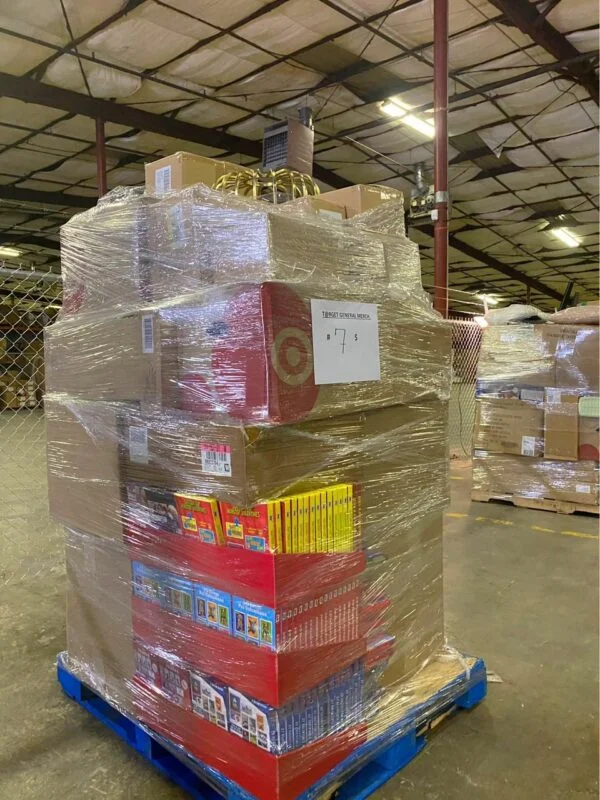
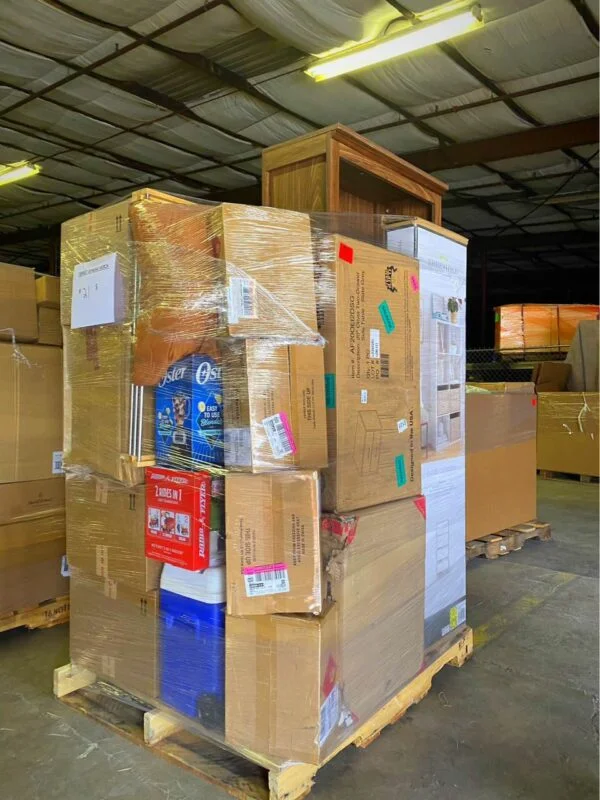
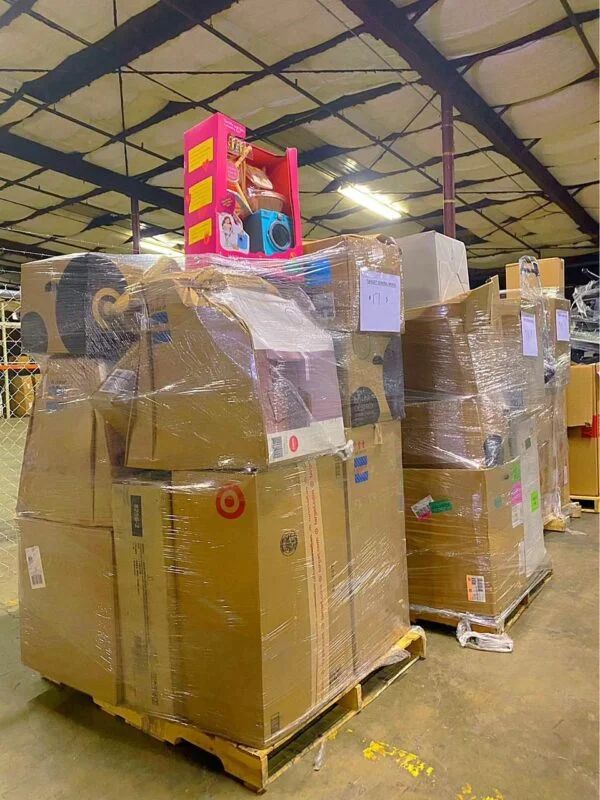
$650.00
Find pallet liquidation near me with great deals on wholesale merchandise. Shop liquidation pallets of tools, clothing, electronics, toys, and more.
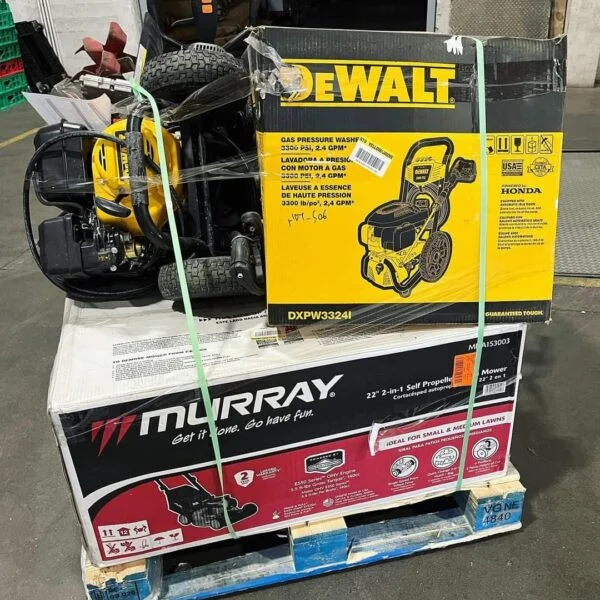
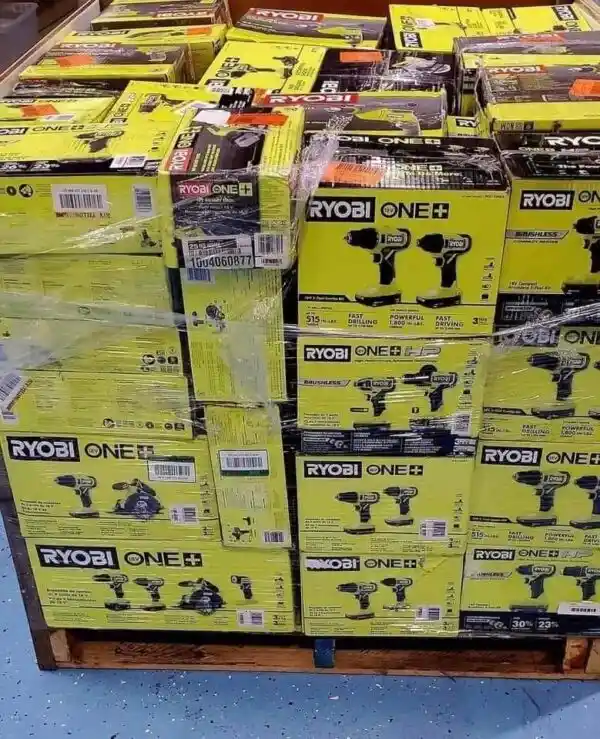
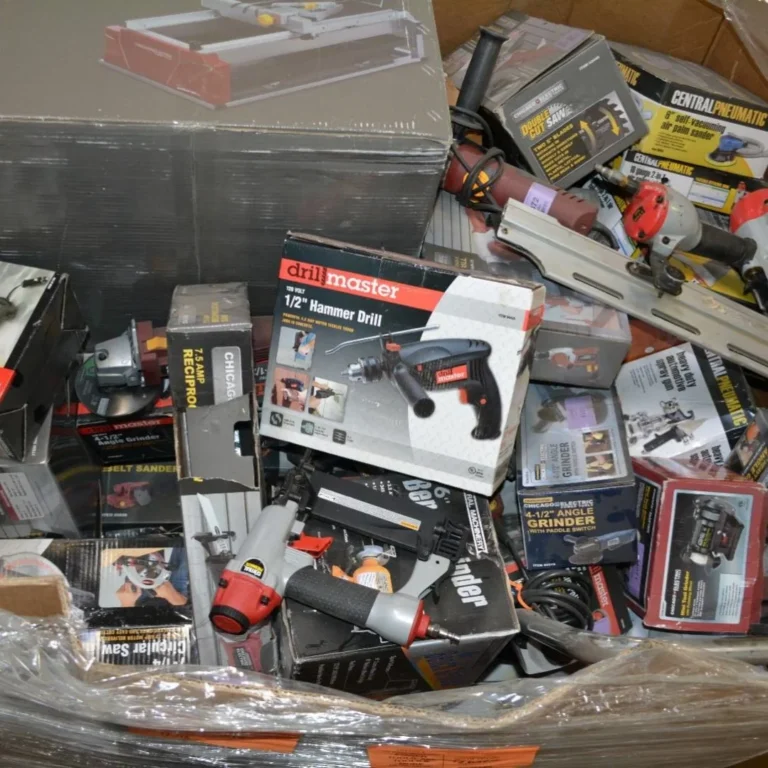
Liquidation Pallets May Include a nice assortment of merchandise from Housewares, Toys, books, Tools, Apparel, Lawn and Garden Items, Electronics, Kitchenware, Furniture, Sporting Goods and much more a pallet cost $650. The merchandise is typically overstock, returns, or discontinued items very clean condition.
Searching for pallet liquidation near me is one of the most common ways new and experienced resellers look for discounted inventory. Instead of purchasing individual products at standard retail prices, liquidation buyers purchase merchandise in bulk lots, often consisting of customer returns, excess inventory, overstock, shelf pulls, or other merchandise that retailers need to move through secondary channels.
For someone searching locally, the biggest advantage is convenience. A nearby liquidation warehouse can potentially reduce freight costs, allow warehouse pickup, and give buyers an opportunity to inspect inventory before purchasing. Local liquidation businesses may also carry merchandise sourced from major retailers such as Target, Amazon, Walmart, Home Depot, and other national chains.
Target has an official liquidation marketplace operated through B-Stock. The marketplace is specifically designed for approved buyers to bid on excess Target inventory, and merchandise can ship from multiple locations across the United States. Target’s official marketplace currently requires U.S. buyers to have a valid state-specific resale certificate, making it particularly important to understand the purchasing requirements before attempting to bid.
The phrase pallet liquidation near me can therefore describe two different buying routes: purchasing directly through an official retailer liquidation marketplace or purchasing from a local liquidation warehouse that has already acquired retailer inventory. Understanding the difference can help you choose the right source for your business.
A target liquidation pallet is a bulk lot of merchandise originating from Target’s liquidation inventory. The official Target Liquidations marketplace currently offers approved buyers access to excess inventory through online auctions.
The merchandise can vary considerably from one lot to another. Depending on the listing, buyers may encounter apparel, home goods, electronics, toys, seasonal products, furniture, appliances, sporting goods, beauty products, and other retail categories.
The condition of the merchandise is particularly important. Target’s official marketplace uses condition categories that include New, Like New, Refurbished, Used – Good, Used – Fair, Salvage, and Mixed Condition. A Mixed Condition lot can contain products across different quality levels, including salvage, unless the specific auction or manifest states otherwise.
That distinction can dramatically affect the economics of a purchase. A pallet of new or like-new products generally requires less processing than a mixed-return pallet containing items that need testing, cleaning, repair, repackaging, or parts recovery.
This is why experienced buyers evaluate the actual condition rather than assuming that all target pallets have the same resale potential.
If you’re wondering how to buy a target pallet, the official route is to apply through the Target Liquidations marketplace. The marketplace states that buyers must create an account, provide the required information, and attach a valid reseller’s certificate when applicable. The current marketplace is open to U.S. buyers only.
Once approved, buyers can review available liquidation auctions, examine the listing details, review available manifests, and place bids according to the marketplace rules.
The process is different from walking into an ordinary Target store and asking to purchase a returned pallet. Target liquidation inventory is handled through dedicated liquidation channels rather than being sold as ordinary retail merchandise.
When buying pallets from Target, read the auction terms carefully before bidding. Pay attention to the condition, number of pallets, product category, estimated retail value, shipping method, warehouse location, and payment requirements.
Target’s official FAQ states that payments for auctions are handled through B-Stock and that wire payment is the accepted payment method for the marketplace, with B-Stock Balance also available where applicable.
For entrepreneurs asking how to buy target pallets, the first step should be deciding what type of merchandise you actually want to sell. Buying a random mixed pallet simply because it appears inexpensive is rarely the strongest strategy.
Instead, identify a category that matches your knowledge and customer base.
For example, an experienced clothing reseller may prefer apparel pallets because they already understand brands, sizes, seasonal demand, and resale platforms. A tool reseller may be better suited to hardware and power-tool inventory because they can recognize valuable brands and test equipment.
When buying target pallets, look at the manifest whenever one is available. A detailed manifest can provide information about the products and quantities included in a lot, allowing you to estimate realistic resale value.
Do not confuse estimated retail value with guaranteed revenue. Retail value tells you what products may have been worth at retail, but your business still has to sell those products at prices customers are willing to pay.
There is an important distinction between buying target pallets through an official marketplace and buying Target-sourced merchandise from a local liquidation business.
When buying through the official Target Liquidations marketplace, approved buyers bid on lots directly through the designated platform. Merchandise can ship from multiple U.S. locations, and shipping terms are specified in each auction.
A local liquidation warehouse, by contrast, may have already purchased truckloads or pallets and then resell individual pallets to local customers.
The local route can have several advantages. You may be able to inspect the pallet, ask questions face-to-face, arrange pickup, and avoid some long-distance freight expenses.
However, you should ask where the warehouse sourced the merchandise. A company selling target liquidation pallets is not automatically owned or operated by Target.
The best local suppliers should be able to explain the inventory source, condition, pricing, and terms clearly.
One of the most common questions from new buyers is how much are target pallets? There is no single fixed price because liquidation pallets are sold through different auction lots and can contain dramatically different merchandise.
The price can depend on product category, number of units, estimated retail value, condition, location, shipping method, and competition from other bidders.
For example, a pallet of new apparel may have a different market value from a pallet of mixed electronics returns. A salvage pallet may be priced much lower than a pallet of new merchandise because the buyer may need to repair or part out a significant portion of the inventory.
This is why the question how much is a target pallet cannot be answered responsibly with one universal number.
Instead, calculate your potential landed cost.
Landed cost = purchase price + shipping + applicable fees + processing costs
Then estimate how many units you can realistically sell and at what prices.
Target’s official marketplace also has specific shipping arrangements. Auctions may use Binding Shipping or Buyer Arranged Shipping, so buyers need to read the individual auction details before bidding.
Target overstock pallets can be attractive because overstock merchandise may require less processing than heavily used customer returns. Overstock generally refers to inventory that remains unsold or exceeds current retail demand.
The official Target liquidation marketplace describes itself as a marketplace for Target excess inventory and provides approved buyers with access to liquidation auctions.
However, don’t assume that every overstock pallet contains brand-new merchandise. The specific listing’s condition information should always be reviewed.
A buyer should also consider product age and seasonality. Seasonal overstock can be profitable when purchased at the right time, but it can become difficult to sell if the relevant season has already passed.
For example, summer merchandise purchased in late summer may require aggressive discounting, while holiday products purchased immediately after the holidays may need to be stored for the following season.
Timing is part of the liquidation business.
Target return pallets are another popular category among resellers. Customer returns can contain products in a wide range of conditions, from nearly new merchandise to products that have been used, damaged, or returned because of missing components.
Target’s official liquidation condition guide clearly distinguishes between New, Like New, Used, Salvage, and Mixed Condition inventory.
A target returns pallet therefore needs to be evaluated carefully. Don’t assume that every returned item is defective, but don’t assume that every item is ready for resale either.
A strong receiving process can make a significant difference. When a pallet arrives, sort the merchandise into categories such as:
This process helps you understand the actual recovery value of the pallet.
The term target medium pallets can refer to a particular lot size or pallet configuration offered by a supplier. Buyers should always verify the actual dimensions, quantity, weight, and number of units rather than relying on a generic label such as “medium.”
Pallet size alone does not determine profitability.
A smaller pallet with high-value, fast-moving products can be more profitable than a larger pallet filled with low-demand merchandise. Similarly, a pallet with 500 inexpensive products can require far more labor to photograph, list, package, and ship than a pallet containing 50 higher-value products.
Think about your available storage and labor before purchasing.
If you’re operating a small resale business from a limited space, several large pallets may quickly become a logistical problem.
People searching for target pallets for sale near me are often looking for a local warehouse where they can purchase merchandise without arranging long-distance freight.
Local liquidation stores can be useful because you can sometimes inspect the merchandise before buying. This is especially valuable when the pallets are unmanifested or contain mixed-condition inventory.
When looking for target pallets near me, search beyond the exact phrase. Local liquidation warehouses may advertise themselves as wholesale liquidation stores, return stores, discount warehouses, bin stores, or pallet liquidation businesses.
Call before visiting and ask whether they currently carry Target-sourced merchandise. Inventory can change rapidly, and a warehouse that had Target pallets last week may have completely different inventory today.
If the warehouse permits inspection, examine the pallet wrapping, boxes, visible products, labels, and general condition.
The question where to buy target pallets near me can be answered through several sourcing methods.
The first is the official Target Liquidations marketplace. This is the most direct documented route for approved U.S. buyers seeking Target liquidation inventory.
The second is local liquidation warehouses that source Target inventory through liquidation channels and resell it locally.
The third is established liquidation marketplaces that list Target returns and overstock inventory. For example, Liquidation.com currently lists Target inventory including guest returns, overstock, shelf pulls, salvage-grade, open-box, and new-condition items.
Each route has different advantages. Official auctions can provide direct access to retailer inventory, while local warehouses may provide easier inspection and pickup. Third-party marketplaces may offer additional selection, but buyers need to understand who the actual seller is and what condition standards apply.
Target wholesale pallets can work well for established businesses that have a clear resale strategy. The important thing is to avoid buying inventory without knowing where it will go.
A reseller might sell merchandise through an online marketplace, local retail store, social media, flea market, discount shop, or direct-to-consumer website.
Different products may require different sales channels.
Small, lightweight products can be economical to ship individually. Bulky items may make more sense for local pickup. High-value merchandise may require stronger authentication and more detailed product descriptions.
When purchasing wholesale target pallets, build your resale strategy around the actual products in the manifest rather than assuming every item will sell at the same price.
Track the results of every pallet. Record acquisition cost, shipping, number of sellable units, average selling price, fees, returns, and net profit.
After several purchases, you’ll have your own data showing which Target categories are most profitable for your business.
A pallet can look attractive while still being a poor investment. The biggest warning sign is a deal where the seller emphasizes a huge “retail value” but provides little information about the actual merchandise.
Always ask for details.
If the pallet is manifested, examine the manifest. If it is unmanifested, understand that you’re taking on additional inventory risk.
Pay attention to condition. Target’s official conditions range from New and Like New to Used, Salvage, and Mixed Condition, so two pallets with similar retail values can have completely different resale economics.
Shipping is another major factor. Target’s marketplace warns that buyers may be responsible for shipping costs, unloading, storage, lumper fees, or other carrier-related costs depending on the shipping arrangement.
Finally, never let urgency replace due diligence. A legitimate liquidation opportunity should still make sense after you calculate the complete cost.
If you’re asking how to get a target pallet, begin by determining whether you qualify to purchase through the official Target Liquidations marketplace. The current marketplace is open to U.S. buyers and requires a valid reseller’s certificate for applicable buyers.
After approval, you can browse available auctions and bid on lots that fit your business.
If you don’t qualify for the official marketplace or simply want a local purchasing option, look for established liquidation warehouses carrying Target-sourced inventory.
The phrase how to get target pallets shouldn’t mean looking for a secret way to obtain free or extremely cheap pallets. It means identifying a legitimate sourcing channel, understanding the inventory, and completing the purchase under clear terms.
For serious resellers, building a relationship with a reputable liquidation supplier can be more valuable than finding one unusually cheap pallet.
Shipping deserves special attention because liquidation pallets are heavy and bulky. A pallet that looks profitable at auction can become much less attractive after freight.
Target’s official marketplace currently uses both Binding Shipping and Buyer Arranged Shipping depending on the auction. Under Binding Shipping, buyers are responsible for shipping-related costs associated with delivery, including certain unloading, storage, or lumper costs. Under Buyer Arranged Shipping, the buyer contracts and coordinates the carrier.
For larger buyers, Target also provides a truckload discount program that can allow qualifying lots won within a 48-hour period to be combined into larger shipments, subject to the program’s requirements.
This illustrates an important principle: freight strategy can be just as important as the purchase price.
If you’re buying multiple pallets, investigate whether shipment consolidation can reduce the effective transportation cost per pallet.
Searching for pallet liquidation near me can open the door to a wide range of inventory opportunities, particularly for entrepreneurs who want to resell products sourced from major retailers. Target is one of the most recognizable sources in this market, and its official liquidation marketplace currently allows approved U.S. buyers to bid on excess Target inventory through B-Stock.
Whether you’re trying to buy Target pallet, researching target pallets for sale, looking for target return pallets, or comparing target overstock pallets, the fundamentals remain the same: understand the condition, inspect the manifest, calculate the landed cost, investigate shipping, and have a realistic resale plan.
For people asking how to buy a pallet from Target, how to buy pallets from Target, or how to buy Target pallets, the official Target Liquidations marketplace is the clearest documented direct route for approved U.S. buyers.
For shoppers looking for target pallets near me, local liquidation warehouses can offer another practical route, especially when they allow inspection and warehouse pickup. Third-party liquidation marketplaces can provide additional options, but buyers should verify the seller and understand the exact source and condition of the inventory.
Most importantly, don’t judge a pallet by its advertised retail value alone. The real question is whether the products can be acquired, processed, and sold profitably after all costs are included.
A smart liquidation buyer doesn’t chase every deal. A smart buyer finds the right inventory, at the right price, from the right supplier, with a clear plan for turning that inventory into revenue.
WhatsApp us
Get 10% off orders of $200 or more when you choose Zelle, Cash App, or Chime during checkout.
How it works: Your discount is automatically applied after you choose an eligible payment method at checkout.
Minimum product subtotal: $200. Credit-card orders remain at standard listed price. One promotion per order.
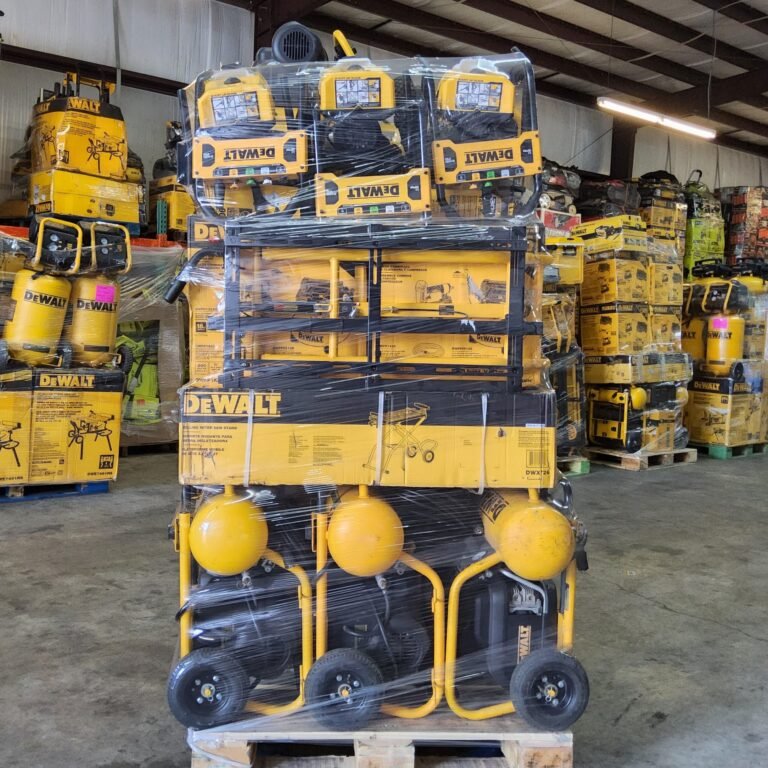
Reviews
There are no reviews yet.