
Call or Text : +1 (440) 613-9487 Or Place your order directly on our website an agent will contact you immediately concerning your order. All bulk orders payment terms we accept bank wire transfer or bank deposite.
$14,000.00
Discover mystery boxes for sale with exciting products, surprise items, and wholesale opportunities. Shop quality mystery boxes at competitive prices.
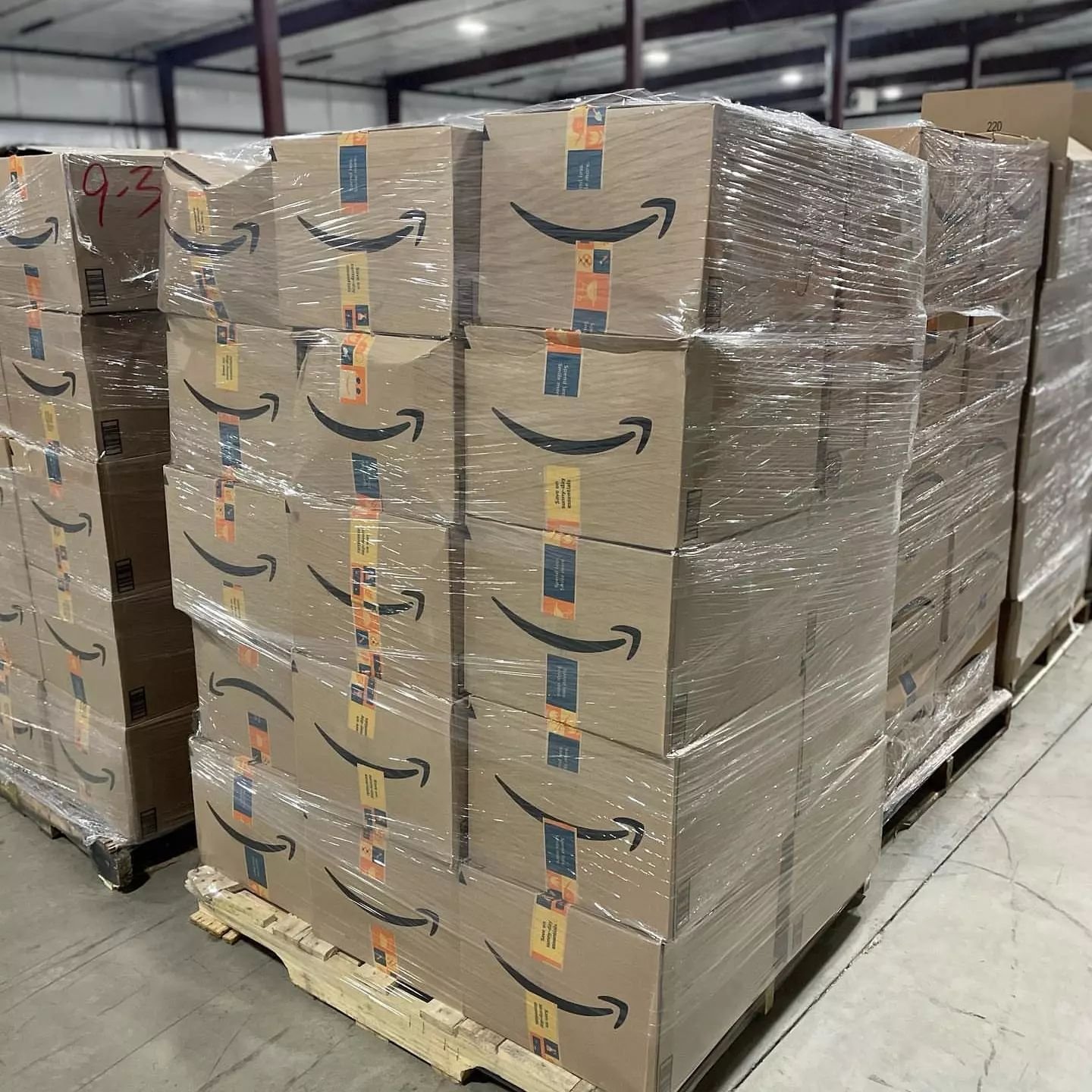
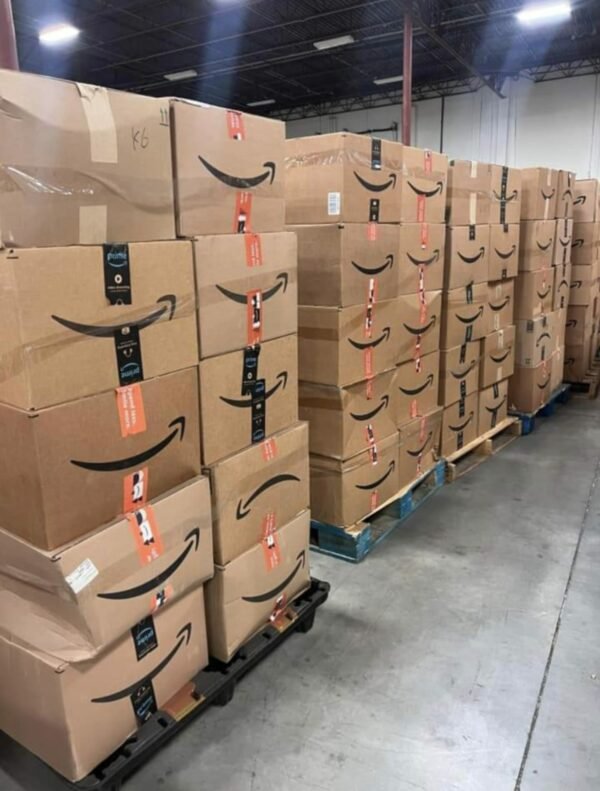
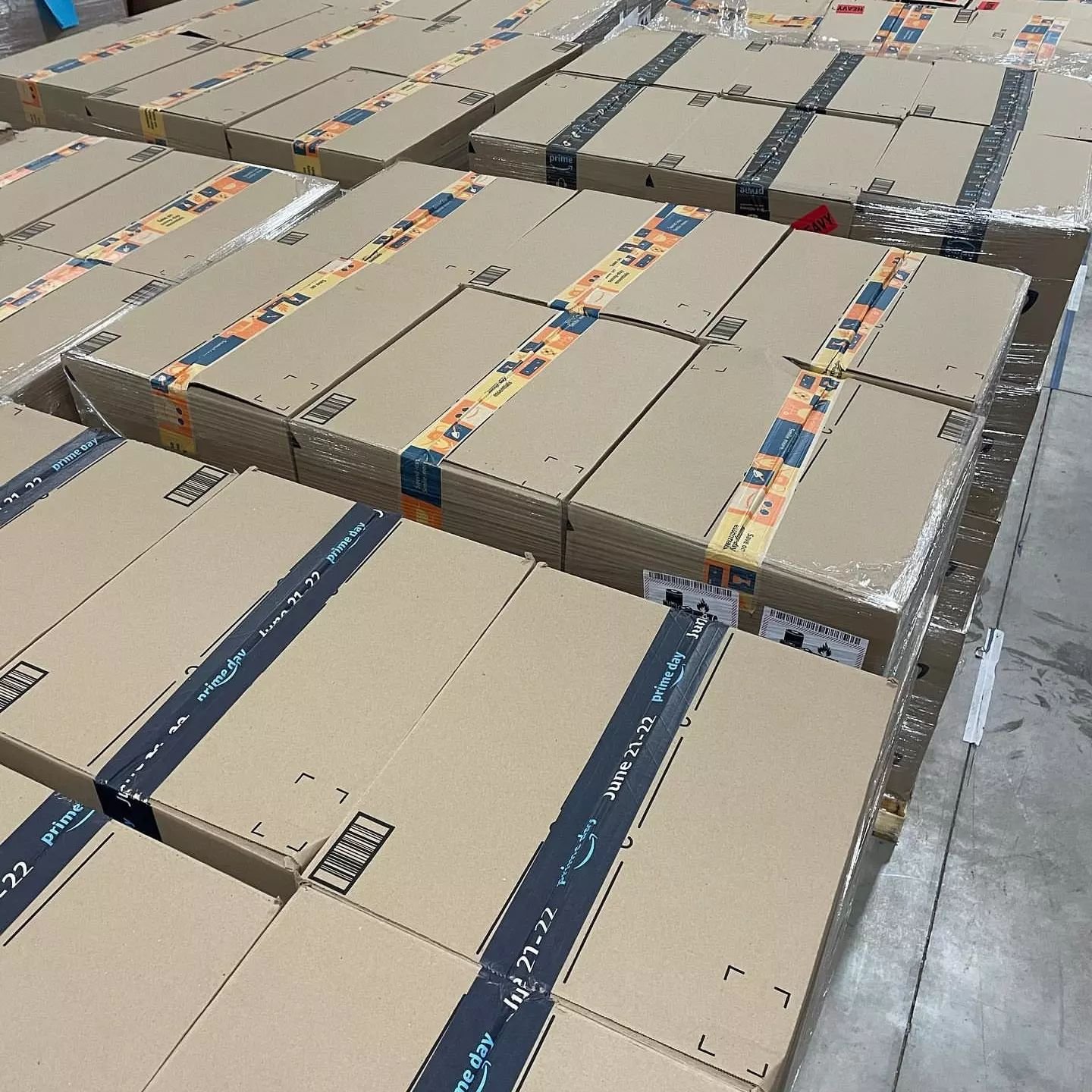
Quantity: 480 Boxes over 24 Pallets over 7000 items per truckload
| Program: | General Merchandise |
|---|---|
| Load Type: | Truckload |
| Pallet Count: | 24 |
| Ships From: | Oshkosh WI |
| Availability: | Weekly |
| Piece per Load: | Call for details |
| Pallet Height: | 4ft – 6ft |
Mystery boxes for sale have become an increasingly popular way for shoppers, bargain hunters, and resellers to access assorted merchandise without knowing exactly which individual products will be inside the box before opening it. The appeal is simple: instead of choosing one product from a conventional retail shelf, buyers receive a collection of items selected from a particular category, inventory source, return stream, or liquidation lot. Depending on the seller, a mystery box can contain clothing, electronics, household products, toys, accessories, beauty products, tools, or general merchandise. The important point is that not every mystery box represents the same type of inventory, so understanding how the box was sourced and how the seller describes its contents is essential.
People searching for an amazon mystery box, amazon mystery boxes, or amazon mystery boxes for sale often assume that every box is an official Amazon product. That assumption can be incorrect. The phrase “Amazon mystery box” is commonly used online to describe assorted merchandise that a third-party seller says originated from Amazon returns, overstock, liquidation inventory, or another resale channel. Buyers should therefore distinguish between a mystery box sold by an independent liquidator and a product directly offered by Amazon. The distinction matters because the seller’s policies, condition descriptions, return terms, and documentation can vary substantially.
For resellers, mystery boxes can be particularly interesting because the contents may contain multiple product categories in one purchase. A single box could potentially contain several products suitable for different resale channels, allowing a reseller to test demand across categories instead of committing to a large quantity of one item. At the same time, the uncertainty that makes a mystery box entertaining also creates risk: there may be damaged products, incomplete products, lower-value products, or merchandise that requires testing before resale. A successful buyer therefore approaches mystery inventory as a form of uncertain inventory acquisition rather than assuming that every box contains high-value products.
A mystery box is a package containing merchandise where the buyer does not receive a complete item-by-item inventory before purchasing. The seller may provide a general category, estimated retail value, product count, condition range, or example products, but the exact contents remain unknown until the box is opened. This structure is different from a standard liquidation case containing a published manifest because the buyer generally has less information about the individual items.
The term mystery boxes for sale covers several different business models. Some sellers assemble boxes specifically as entertainment-oriented bundles, while others create boxes from customer returns, overstock, shelf pulls, excess inventory, or liquidation merchandise. There are also sellers that purchase larger lots and divide those lots into smaller mystery packages for individual consumers and small resellers. Consequently, the phrase alone does not tell you whether the merchandise is new, used, tested, untested, returned, refurbished, or damaged.
The best way to understand a mystery box is to think of it as a category of inventory packaging rather than a single standardized product. One seller might specialize in electronics, another in fashion, and another in general merchandise. A box containing unopened household products is obviously different from a box containing customer-returned electronics that may require testing. A responsible listing should explain these differences clearly.
This is why buyers should read the complete product description before purchasing. The FTC recommends examining the entire description, checking the seller’s policies, comparing the total cost, and understanding whether products described as refurbished, used, close-out, or similar terms may have different conditions from ordinary retail merchandise.
The appeal of a mystery box comes from a combination of discovery, value hunting, and potential resale opportunities. Opening an assortment creates an element of surprise that a traditional purchase does not provide. Instead of knowing exactly what will arrive, the buyer receives a curated or randomly selected group of products within a stated category.
For resellers, there is another attraction: diversification. Imagine a reseller purchasing a box containing household accessories, small electronics, toys, and personal-care items. Instead of having all available capital tied up in one SKU, the reseller receives several potential product categories. Some items might sell through local marketplaces, others through online platforms, and others through flea markets or discount stores.
However, the mystery element should never be confused with a guarantee of profit. A seller can accurately describe a box while the buyer still receives merchandise that does not match their preferred resale market. Transportation costs, marketplace fees, testing expenses, damaged items, and slow-moving inventory can reduce the actual return on investment. The sensible approach is to calculate potential costs before treating mystery inventory as a business opportunity.
The phrase amazon mystery boxes is one of the most searched variations in this category. Buyers often use it when looking for boxes containing merchandise associated with Amazon returns, surplus inventory, customer returns, or liquidation. However, “Amazon mystery box” is not necessarily a standardized Amazon product category.
A third-party business may acquire liquidation inventory and then package a portion of it into mystery boxes. In that situation, the box may contain products originally sold through Amazon, but the box itself is being sold by the liquidator. That distinction should be clear in the listing.
The term mystery box amazon is essentially another variation of the same search intent. People may be looking for an assortment of products associated with Amazon, a box of returned merchandise, or a liquidation opportunity. Before purchasing, buyers should identify who actually owns the inventory, who is selling it, what condition it is in, and what happens if the contents do not match the advertised description.
It is also important to avoid assuming that a recognizable retailer name guarantees a particular value. The FTC advises consumers to research unfamiliar sellers, search for complaints or reviews, inspect descriptions carefully, and consider whether unusually cheap branded products could be counterfeit or otherwise problematic.
Searches for amazon boxes can have two completely different meanings. Someone might literally be looking for empty shipping boxes, or they might mean boxes containing merchandise associated with Amazon returns. A well-optimized article should distinguish these meanings rather than treating them as identical.
When people discuss returned merchandise, they may be referring to customer returns that entered a retailer’s reverse-logistics system. Returned merchandise can vary widely in condition. Some products may be unopened, some may have damaged packaging, some may have been used briefly, and others may be defective or incomplete.
That variability is one reason liquidation buyers often categorize inventory by condition. A mystery box containing new or unused products generally carries a different level of uncertainty from a box containing untested customer returns. If a seller does not explain the condition, the buyer should ask before purchasing.
The packaging itself can also provide clues, but it should not be treated as proof of product condition. A sealed-looking outer box does not necessarily mean every product inside is factory sealed. Similarly, an opened retail package does not automatically mean the product is defective.
When searching for amazon mystery boxes for sale, buyers should begin with the seller rather than the advertised retail value. A large claimed retail value can sound impressive, but retail value is not the same thing as resale value or actual market value. A product’s realistic value depends on condition, demand, competition, selling fees, shipping costs, and the price buyers are actually willing to pay.
The seller should provide clear information about what the buyer is purchasing. Important details include the general merchandise category, approximate number of items, condition, shipping terms, refund policy, and whether the contents are selected randomly or according to a particular theme.
The total cost should also include shipping and other fees. The FTC specifically recommends comparing the total price, including shipping, handling, delivery, and taxes, rather than evaluating a deal solely on its headline price.
Another important question is whether the seller shows actual examples of the merchandise. Stock photographs can be useful for illustrating a category, but they do not prove that the specific products shown will be included. The FTC advises online marketplace buyers to look closely at seller photographs and recognize that stock images may not demonstrate the condition or existence of the actual merchandise.
People searching for amazon mystery box near me or amazon mystery boxes near me are usually interested in avoiding shipping costs, visiting a physical warehouse, or inspecting liquidation merchandise locally. Local purchasing can provide an important advantage because buyers may be able to examine the seller’s facility, ask questions directly, and potentially arrange pickup instead of paying freight or parcel shipping.
The phrase mystery box near me can also include independent liquidation warehouses that sell returned and surplus merchandise without being directly affiliated with Amazon. These businesses may sell individual boxes, cases, pallets, or truckloads depending on their inventory.
When visiting a local liquidation business, buyers should ask whether merchandise is manifested, sorted, tested, or sold strictly as-is. A physical location does not automatically guarantee product quality or business legitimacy. Buyers should still verify the business name, policies, receipts, contact information, and payment terms.
Local pickup can also make it easier to understand the physical condition of a box before purchase, although buyers should not open sealed inventory if the seller does not permit inspection. The objective is to gather enough information to understand the transaction without creating a dispute over merchandise that was explicitly sold as unopened or uninspected.
The question where can i buy mystery boxes has several possible answers depending on the type of inventory you want. Consumers can encounter mystery boxes through online marketplaces, liquidation businesses, specialty resale companies, local warehouses, auction platforms, and independent retailers. Each channel has different levels of transparency and buyer protection.
For a beginner, the seller’s reputation is more important than simply finding the cheapest box. A seller with clear terms, verifiable contact information, realistic product descriptions, documented policies, and secure payment options generally gives a buyer more information to work with than an anonymous seller offering unusually valuable merchandise at an implausibly low price.
The FTC recommends researching a seller before buying, checking the seller’s terms, confirming contact information, reviewing shipping and refund policies, and using safer payment methods with appropriate buyer protections.
A useful rule is to avoid transactions where the seller pressures you to move outside a marketplace’s normal payment system. If a marketplace offers buyer protection and a seller insists on receiving payment through an unrelated method, that can eliminate protections the marketplace would otherwise provide. The FTC specifically warns consumers not to pay outside a marketplace’s payment system when doing so would remove available protections.
People searching how to buy amazon mystery box should begin by identifying what “Amazon” actually means in the listing. Does the seller claim that the products originated from Amazon? Does the seller claim to be an Amazon-affiliated business? Is the inventory actually described as customer returns, overstock, or liquidation? These questions can dramatically change what the buyer should expect.
Next, determine the condition. A box advertised as “customer returns” should not be treated as equivalent to factory-new merchandise. The seller may have inspected some products, but unless testing is explicitly documented, the buyer should understand that condition can vary.
Then calculate the maximum amount you are comfortable spending. Mystery inventory should not be purchased with the assumption that every item will be a profitable resale. Instead, consider the purchase price as the cost of acquiring uncertain inventory.
Finally, preserve all transaction records. Save the product page, order confirmation, seller communications, payment records, shipping information, and any stated refund policy. The FTC recommends keeping these records when shopping online because they can be important if a dispute occurs.
The phrase amazon return boxes for sale generally refers to boxes containing merchandise believed to have entered a retailer’s returns or liquidation stream. However, the phrase should not automatically be interpreted as an official Amazon product name. Third-party liquidators may use it to describe merchandise sourced through various channels.
Returns can be attractive because they can contain recognizable consumer products at prices below conventional retail. But returns also have uncertainty built into them. A customer may have returned an item because it was unwanted, damaged, incomplete, incorrectly ordered, or defective.
For this reason, return inventory is often better suited to buyers who understand inspection and resale. A reseller may need to clean products, test electronics, verify accessories, replace packaging, photograph items, and accurately describe condition before listing them.
The buyer should also ask whether the box is manifested. A manifest can provide product-level information, although it does not necessarily guarantee that every item will arrive in perfect condition. An unmanifested box provides less information and therefore carries greater uncertainty.
Searches for boxes from amazon often reflect curiosity about how returned merchandise reaches the secondary market. Large retailers operate complex supply chains involving returns processing, inventory management, redistribution, liquidation, and other channels. Merchandise that is no longer suitable for conventional retail sale may enter secondary markets.
A liquidator can purchase inventory lots and resell them to smaller businesses. Those lots may be organized into cases, boxes, pallets, or larger loads. Some businesses then break the inventory into smaller packages for individual buyers.
This creates a chain between the original retailer and the final reseller. The final buyer should not assume that every intermediary is an official representative of the original retailer. The more accurate question is: Who is selling this inventory, and what documentation do they provide about its source and condition?
That distinction helps buyers understand the difference between legitimate liquidation and vague marketing language.
Liquidation pallets are larger-scale versions of the same general resale concept. Instead of purchasing a single box, a buyer may acquire a pallet containing numerous cartons or individual products. Pallet inventory can include customer returns, overstock, shelf pulls, discontinued products, excess inventory, or other categories depending on the source.
The advantage of pallets is scale. A reseller can acquire more inventory in one transaction, potentially reducing the average acquisition cost per item. The disadvantage is exposure: a pallet can require significantly more storage, transportation, sorting, testing, and working capital than a single mystery box.
Searches for amazon pallets for sale are common among established resellers who want larger quantities. However, pallet purchases should be approached differently from consumer mystery boxes because transportation costs can become significant. Freight charges, unloading requirements, warehouse space, and processing time can all affect the real economics of a pallet.
The phrase pallet liquidation near me reflects a local search for warehouses or businesses selling liquidation inventory. Local purchasing can reduce freight costs and may allow a buyer to inspect available inventory before committing to a purchase.
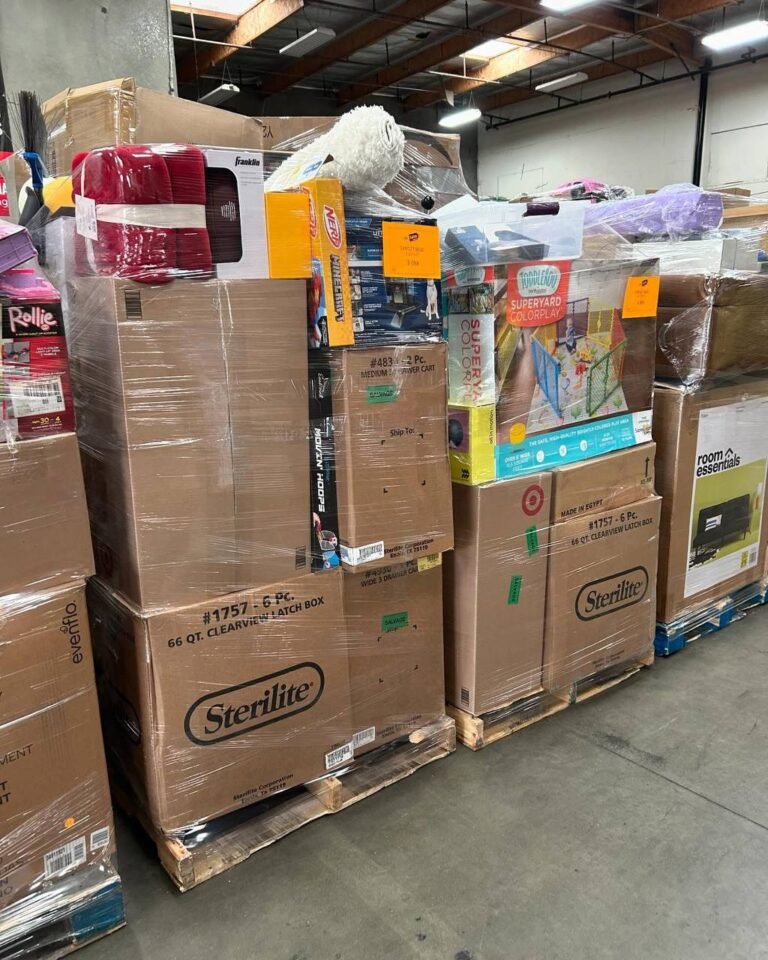
A local pallet liquidation business may offer multiple inventory grades. Some pallets may be manifested, while others may be sold unmanifested. Some may contain a single product category, while others may contain mixed general merchandise.
The key is to compare like with like. A manifested pallet of tested electronics should not be compared directly with an unmanifested pallet of customer returns. The risk profile is different, so the purchase price should be interpreted differently as well.
For businesses purchasing at scale, local inspection can be particularly useful. It allows buyers to ask about the source, condition grading, expected product categories, and loading arrangements before committing to transportation.
A mystery box warehouse is typically a business location where assorted merchandise is stored and sold in boxes, cases, pallets, or other quantities. Some warehouses specialize in returns and liquidation, while others operate as broader wholesale or surplus businesses.
A legitimate warehouse should be able to explain what it sells and how its inventory is categorized. Buyers should ask whether the merchandise is new, used, returned, tested, untested, refurbished, or sold as-is.
Warehouse visits can also provide an opportunity to evaluate the business itself. Look for clear business information, written terms, receipts, consistent contact information, and transparent explanations of the inventory. A professional operation should not need to rely entirely on exaggerated claims about hidden treasures.
The FTC’s online-shopping guidance emphasizes researching unfamiliar sellers and reviewing complaints, policies, and transaction terms before buying. Those same principles are useful when evaluating physical liquidation businesses.
Liquidators connect surplus or unwanted inventory with secondary-market buyers. Depending on their business model, they may purchase inventory from retailers, manufacturers, distributors, auctions, or other commercial sources.
A liquidator’s role is different from that of a traditional retailer. The objective is generally to move inventory efficiently rather than present every item in pristine retail-ready condition. That is why liquidation buyers should expect more variability.
Good liquidation businesses explain their grading systems clearly. Terms such as “new,” “open box,” “used,” “customer return,” “salvage,” and “untested” should have understandable meanings. If the seller uses condition terminology without explaining it, ask for clarification before buying.
The relationship between the buyer and liquidator is also important. Resellers who purchase repeatedly may benefit from understanding the seller’s inventory patterns, category strengths, and documentation practices. Over time, this can make purchasing decisions more informed than simply choosing boxes based on attractive photographs.
The search phrase how to buy a box of lost mail is often associated with online videos and liquidation businesses claiming to sell undelivered or unclaimed packages. Buyers should be especially careful with this category because the terminology can be used loosely.
There is a major difference between legitimate surplus merchandise and a seller claiming to possess random packages that were supposedly lost in the postal system. Buyers should ask what the merchandise actually is, who legally owns it, how it was acquired, and whether the seller has documentation supporting the inventory source.
A seller should never use the mystery element to avoid answering basic questions about ownership and transaction terms. “You never know what you’ll get” can describe a genuine mystery product, but it should not replace information about the seller, payment process, condition, shipping, or refund policy.
The FTC also warns about unexpected packages and brushing scams. In an August 2026 consumer alert, the agency explained that unexpected packages can be part of schemes designed to create fake reviews or obtain personal information, and it advised consumers to be cautious with QR codes included in unsolicited packages.
That does not mean every mystery-package business is fraudulent. It means buyers should distinguish entertainment-style mystery products from legitimate inventory transactions and should never provide sensitive information simply because a package includes an unfamiliar QR code or unexpected instruction.
The most effective way to evaluate mystery boxes for sale is to focus on the information surrounding the uncertainty. A mystery box is inherently uncertain about its exact contents, but the transaction itself should not be mysterious.
Start with the seller. Search the company name along with terms such as “reviews,” “complaints,” or “scam.” Look for consistent information across multiple sources rather than relying exclusively on testimonials displayed on the seller’s own website.
Next, examine the description. What category of merchandise is included? What condition is expected? Is there a minimum number of items? Does the seller guarantee any particular product category? Is the box refundable?
Then calculate the complete cost. Include the box price, shipping, taxes, handling fees, and any expenses required to test or prepare merchandise for resale. A $100 box that costs another $50 to ship is effectively a $150 inventory purchase.
Finally, consider what happens if the contents are disappointing. If the seller explicitly states that mystery boxes are final sale, the buyer should treat the entire purchase as uncertain inventory rather than expecting a conventional retail return.
One common mistake is assuming that the word “Amazon” automatically means the merchandise came directly from Amazon. Another is assuming that a claimed retail value represents the actual amount the buyer can recover through resale.
A third mistake is purchasing without calculating shipping. This is particularly important for bulky boxes and pallets. The merchandise may look inexpensive until freight and handling costs are added.
Another mistake is ignoring condition. A returned product may require testing or cleaning before it can be resold. Electronics may need functional testing, while clothing may need inspection for stains, missing tags, or damage.
A final mistake is using unsafe payment methods. The FTC advises consumers to use safer payment methods with appropriate protections and warns against sellers who insist on payment methods that make it difficult to recover money.
For resellers, mystery boxes can be used as a way to experiment with new product categories. Someone who normally sells clothing might use a mixed box to test household goods, accessories, or small electronics. This can help reveal which categories attract customers without requiring a large initial inventory commitment.
However, resellers should track every purchase carefully. Record the acquisition cost, shipping cost, number of usable items, number of damaged items, selling fees, packaging costs, and eventual revenue. After several purchases, this information can show whether the mystery-box model is actually working for the business.
The most valuable metric is not the advertised retail value. It is the realized resale value after expenses. If a box costs $200 and produces $500 in sales but requires $150 in fees, shipping, repairs, and packaging, the economic result is very different from simply saying the box generated $500.
This accounting approach turns mystery inventory from a guessing game into a measurable business process. It also makes it easier to compare mystery boxes with manifested cases and liquidation pallets.
Mystery boxes and liquidation pallets serve different types of buyers. A mystery box generally requires less capital, less storage, and less transportation capacity. A pallet provides more inventory but also increases the financial and operational commitment.
| Factor | Mystery Box | Liquidation Pallet |
|---|---|---|
| Typical inventory volume | Smaller | Larger |
| Capital requirement | Usually lower | Usually higher |
| Storage requirement | Limited | Significant |
| Shipping impact | Parcel or small freight | Often freight |
| Product visibility | Usually limited | May be manifested |
| Resale potential | Varies | Varies |
| Processing workload | Lower | Higher |
| Risk exposure | Smaller transaction | Larger transaction |
Neither format automatically guarantees better results. The right choice depends on the buyer’s storage, budget, resale channels, experience, and ability to process inventory.
A beginner may prefer a smaller purchase because it limits the amount of capital exposed to uncertain inventory. An experienced reseller with warehouse space and established sales channels may prefer pallets because larger lots can support a more consistent inventory pipeline.
A mystery box listing deserves additional scrutiny when it makes extraordinary promises without providing meaningful evidence. Examples include guaranteed luxury products, guaranteed high-value electronics, or claims that every box contains merchandise worth many times the purchase price.
Another warning sign is pressure to pay immediately. Legitimate sellers can have inventory limits, but buyers should still have enough time to review the terms and understand what they are purchasing.
Payment instructions are another important consideration. The FTC warns that scammers often insist on payment methods that make it difficult to recover money, including gift cards, wire transfers, cryptocurrency, or certain payment-app arrangements.
A seller that refuses to provide a business name, physical address, contact information, product terms, or refund policy should be treated cautiously. Transparency is especially important when the exact contents of the merchandise are already uncertain.
Mystery boxes for sale can be an interesting way to explore surplus merchandise, returned products, overstock, and resale inventory, but the mystery should apply to the contents—not to the identity of the seller or the terms of the transaction. Buyers should understand exactly what type of merchandise they are purchasing, how its condition is described, what the total cost will be, and whether the seller provides any refund or dispute process.
The popularity of terms such as amazon mystery box, amazon mystery boxes for sale, mystery box amazon, amazon mystery box near me, and amazon return boxes for sale shows how strong the interest is in returned and liquidation merchandise. Yet these phrases should not be interpreted as proof that Amazon itself is selling a particular mystery-box product. Third-party sellers and liquidators may use these terms to describe inventory associated with a broader liquidation supply chain.
For larger buyers, amazon pallets for sale, pallet liquidation near me, and mystery box warehouse searches can lead to opportunities to acquire greater volumes of inventory. Those purchases require more planning because freight, storage, inspection, testing, and resale capacity become increasingly important.
The safest strategy is straightforward: research the seller, read the entire listing, understand the condition, calculate the complete cost, keep transaction records, and use a payment method with appropriate protections. The FTC specifically recommends checking sellers and marketplaces, reviewing return policies, comparing total costs, and maintaining records of online purchases.
Mystery inventory can be fun, but informed buying is what turns an uncertain purchase into a manageable one. Whether you are looking for a single box, returned merchandise, or larger liquidation pallets, the strongest decisions come from understanding the source, condition, economics, and risks before money changes hands.
The phrase amazon mystery box is commonly used by third-party sellers to describe assorted merchandise associated with returns, liquidation, or surplus inventory. Buyers should verify the actual seller and source rather than assuming that the phrase means Amazon itself is selling the box.
The answer depends on the seller, purchase price, merchandise condition, and intended use. A mystery box can contain useful resale inventory, but there is no universal guarantee that the contents will generate a profit.
People searching where can i buy mystery boxes may find online marketplaces, liquidation companies, local warehouses, auction platforms, and specialty resale businesses. Research the seller carefully and review payment, shipping, condition, and refund policies before purchasing.
Potentially, depending on the seller and the applicable transaction terms. Buyers should determine whether the merchandise consists of returns, overstock, untested products, or another inventory category and should calculate the costs involved in preparing the merchandise for resale.
Look for transparent business information, clear condition descriptions, understandable pricing, written terms, legitimate contact information, and a clear explanation of how the inventory was sourced. A professional warehouse should be able to explain what buyers can reasonably expect without relying entirely on exaggerated claims.
Research the seller, search for complaints and reviews, inspect the listing carefully, calculate the complete price, and use safer payment methods. The FTC advises consumers to be cautious when sellers demand payment methods that make it difficult to recover funds.
The phrase can refer to various types of returned, undelivered, unclaimed, or surplus packages, but buyers should not assume that a seller has a particular legal or commercial source of “lost mail.” Ask the seller how the inventory was obtained and what documentation or description accompanies it.
They serve different purposes. Mystery boxes generally involve smaller quantities and less capital, while pallets involve greater inventory volume and usually require more storage, transportation, and processing capacity. The appropriate option depends on the buyer’s circumstances.
Do not automatically scan unfamiliar QR codes or provide personal information. The FTC has warned that unexpected packages can be part of brushing scams designed to generate fake reviews or obtain sensitive information.
No. Retail value is not the same as resale value. Actual profitability depends on the condition of the merchandise, market demand, selling fees, shipping, preparation costs, and the prices customers are willing to pay.
WhatsApp us
Get 10% off orders of $200 or more when you choose Zelle, Cash App, or Chime during checkout.
How it works: Your discount is automatically applied after you choose an eligible payment method at checkout.
Minimum product subtotal: $200. Credit-card orders remain at standard listed price. One promotion per order.
Reviews
There are no reviews yet.