Description
Cosmetic Liquidation Pallets: A Complete Guide to Buying Beauty Inventory in Bulk
What Are Cosmetic Liquidation Pallets?
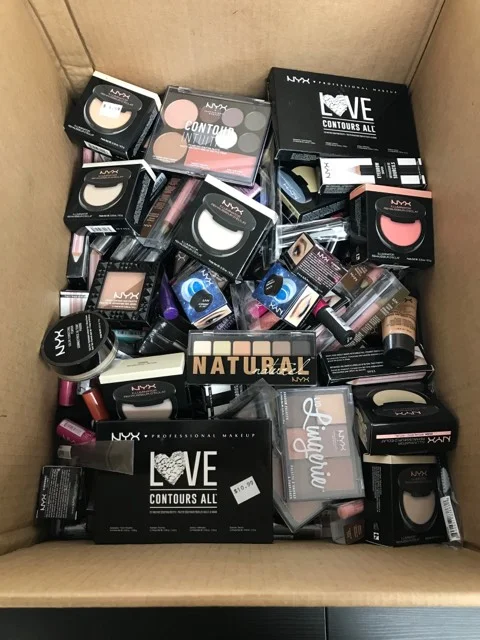
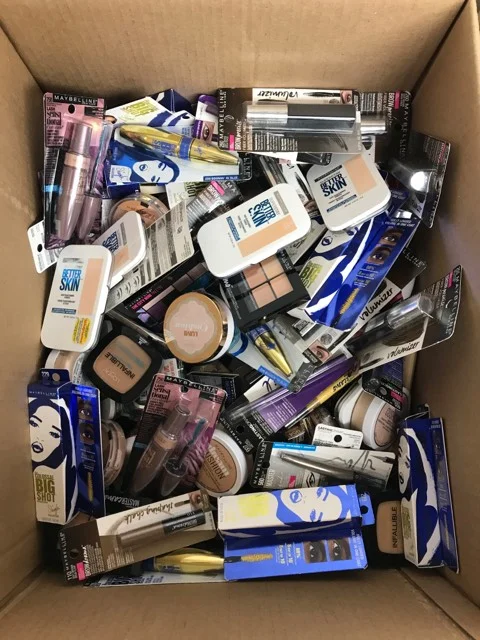
Cosmetic liquidation pallets are bulk lots of beauty merchandise sold below traditional retail pricing. These pallets can contain makeup, skincare, haircare, personal-care products, beauty accessories, and other merchandise that retailers, distributors, or liquidators are moving out of inventory. For resellers, boutique owners, online sellers, beauty professionals, and discount retailers, liquidation can create an opportunity to acquire a large quantity of products at a lower average cost per unit.
The merchandise inside a pallet can come from different inventory situations, including overstock, discontinued products, seasonal merchandise, shelf pulls, customer returns, packaging changes, and other surplus inventory. That means one pallet may contain products in very different conditions, so understanding the manifest and product grades is essential before purchasing.
The appeal is straightforward: instead of buying hundreds of individual beauty products at retail prices, a reseller can acquire a mixed lot and then sell individual items, bundles, or curated beauty boxes. The potential margin comes from the difference between the acquisition cost and the eventual selling price after accounting for shipping, marketplace fees, packaging, damaged inventory, and unsold products.
The liquidation cosmetics market is particularly interesting because beauty products are frequently purchased as impulse items, gifts, replenishment products, and personal-care essentials. However, cosmetics require more due diligence than many other liquidation categories because product condition, authenticity, expiration information, packaging integrity, and hygiene are important considerations.
How Cosmetic Liquidation Works
The process behind cosmetic liquidation is relatively simple. Retailers and distributors periodically need to clear inventory that is no longer appropriate for their regular sales channels. Rather than holding that merchandise indefinitely, they may sell it to liquidation companies, wholesalers, auction platforms, or secondary-market buyers.
The resulting lots can vary significantly. Some are primarily new overstock, while others may contain customer returns or shelf-pull merchandise. The difference can dramatically affect the actual resale value of the pallet.
A good buyer therefore evaluates the cost per usable unit, not merely the advertised retail value. For example, a pallet advertised as having $10,000 in retail merchandise is not automatically a $10,000 opportunity. If a substantial portion is damaged, expired, opened, incomplete, or difficult to resell, the practical value may be much lower.
This is why manifests are valuable. A detailed manifest can provide product names, quantities, retail values, condition information, UPCs, or other identifying details. When a seller cannot provide meaningful information about a pallet, buyers should approach the transaction carefully.
What Can You Find Inside Liquidation Cosmetics Pallets?
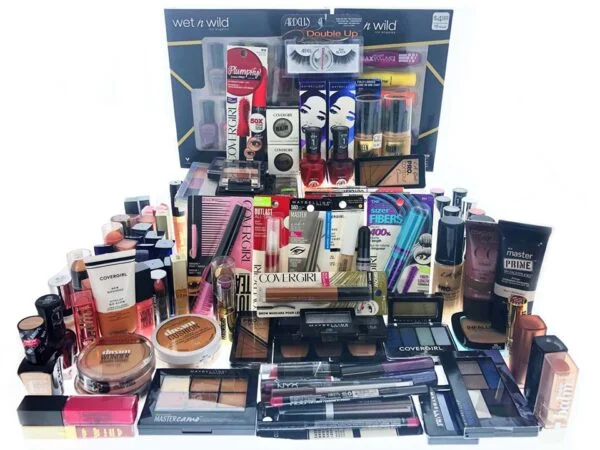
The contents of cosmetics liquidation pallets can vary enormously. Some lots are focused specifically on makeup, while others combine beauty and personal-care categories.
Common inventory can include:
- Foundation and concealer
- Lipsticks and lip glosses
- Mascara and eyeliner
- Eyeshadow palettes
- Makeup brushes
- Blush and bronzer
- Skincare products
- Facial cleansers
- Moisturizers
- Haircare products
- Body-care products
- Beauty accessories
- Fragrance and personal-care items
A mixed pallet can be particularly useful for a reseller who operates a broad beauty store because it creates multiple product categories from one purchase.
However, specialized pallets may be easier to market. A pallet containing primarily makeup can be promoted to makeup enthusiasts, beauty boutiques, or online sellers, while a skincare-focused lot may appeal to a different customer base.
High End Cosmetics Liquidation: Is It Worth Buying?
High end cosmetics liquidation can attract significant attention because premium beauty products may command higher individual selling prices. Brands associated with luxury beauty, prestige makeup, and premium skincare can potentially create attractive resale opportunities when purchased legitimately and at the right acquisition price.
But high retail value does not automatically mean high profit. Luxury cosmetics can have stricter authenticity concerns, and buyers should be particularly cautious when a supplier claims to offer expensive branded products at prices that appear unrealistic.
Authenticity documentation, invoices, supply-chain information, product codes, packaging, and condition should all be investigated. A reseller should never assume that a branded product is genuine simply because the packaging looks convincing.
The secondary beauty market also includes significant consumer concern about counterfeit, expired, or improperly stored products. Community discussions among beauty resellers regularly emphasize the importance of checking authenticity and expiration status when purchasing liquidation inventory.
For that reason, the best high end cosmetics liquidation purchase is one supported by clear sourcing information rather than one based purely on an unusually low price.
Wholesale Liquidation Cosmetics for Resellers
Wholesale liquidation cosmetics can be an effective sourcing strategy for businesses that already have established sales channels. Instead of purchasing individual units from traditional wholesalers, a reseller can acquire larger quantities and potentially lower the average acquisition cost.
The economics become more interesting when the reseller has several ways to move inventory. For example, a business might sell premium products individually through an online marketplace, create beauty bundles for social-media customers, and move lower-value items through discount promotions.
This approach spreads risk across multiple sales channels.
A reseller should calculate the expected landed cost per sellable item before purchasing. That calculation should include the pallet price, freight, taxes where applicable, handling, packaging, marketplace fees, and an allowance for damaged or unsellable merchandise.
A simple formula is:
Landed cost per sellable unit = Total acquisition and handling cost ÷ Number of genuinely sellable units
This figure provides a much more useful picture than simply comparing the pallet price with the manufacturer’s suggested retail price.
Beauty Products and Resale Potential
The broad category of beauty products offers several advantages for resellers. Many products are relatively small, lightweight, and easy to ship compared with bulky merchandise. A reseller can potentially turn one pallet into hundreds of individual listings or curated bundles.
Beauty products also lend themselves well to social-media marketing. Demonstrations, tutorials, unboxings, before-and-after content, and product comparisons can help sellers attract customers.
However, beauty inventory is highly dependent on condition. Sealed, new merchandise is generally easier to sell than products with damaged packaging. Opened makeup may present hygiene concerns and should not automatically be treated as equivalent to new merchandise.
Storage conditions matter as well. Heat, humidity, freezing temperatures, and prolonged exposure to unsuitable environments can affect certain cosmetics and skincare products.
Dior Cosmetics Makeup and Premium Inventory
Dior cosmetics makeup is an example of the type of premium beauty merchandise that can attract strong consumer interest. Products associated with recognizable luxury brands may receive attention from shoppers who are looking for premium cosmetics at discounted prices.
For a reseller, however, brand recognition must be paired with verifiable authenticity. Premium products should ideally come with legitimate sourcing documentation and identifiable product information.
The resale strategy should also account for the difference between current and discontinued packaging. Beauty brands periodically update product packaging, formulations, shade ranges, and product names. Older packaging may still be legitimate, but its marketability can differ from current retail versions.
A reseller should accurately describe the product rather than implying that an older package is the newest version.
Makeup Store Makeup vs. Liquidation Inventory
A traditional makeup store makeup purchase gives customers the benefit of controlled retail conditions, clear product presentation, and standard return policies. Liquidation inventory operates differently because the merchandise has entered a secondary distribution channel.
That difference creates both the opportunity and the risk.
Retail shoppers may pay full price for products because they value convenience and predictable availability. A liquidation reseller can potentially purchase excess inventory at a discount and pass part of that savings to customers while retaining a margin.
The reseller’s job is to create confidence. Clear photographs, accurate descriptions, honest condition grading, and transparent policies can make a major difference.
Ulta Cosmetics Sale vs. Liquidation Pallets
The Ulta cosmetics sale market provides an interesting comparison. Ulta currently maintains a large sale section covering makeup, skincare, haircare, fragrance, body care, and other beauty categories. Its current sale listings include products from brands such as Morphe, Fenty Beauty, e.l.f. Cosmetics, and Supergoop!, with individual products discounted from their listed prices.
For consumers, buying during an official retailer sale can be more straightforward because shoppers receive established retail purchasing protections and can select individual products.
For resellers, liquidation can potentially offer a lower unit cost because inventory is purchased in larger quantities. However, the trade-off is reduced certainty about exact product selection, condition, and sell-through.
The two models therefore serve different purposes. A consumer might prefer selecting individual discounted products during an Ulta cosmetics sale, while a reseller may prefer a carefully vetted liquidation lot that provides enough margin for resale.
Which Moira Cosmetics Palette Has Cool Tones?
The question which moira cosmetics pallete has cool tones is highly specific and highlights another important point about beauty inventory: color and shade preferences can strongly affect resale demand.
Cool-toned eyeshadow palettes generally emphasize shades such as mauve, taupe, cool brown, gray, plum, lavender, and certain blue-based colors. Warm palettes tend to emphasize gold, orange, terracotta, copper, and warm brown tones.
When buying liquidation makeup, shade distribution matters. A pallet containing hundreds of products in unpopular or difficult-to-match shades may be less valuable than a balanced assortment.
If a liquidation manifest provides exact product names and shades, examine those details before buying. Don’t assume every shade within a popular palette has equal resale potential.
Cosmetic Cosmetic: Why Product Identification Matters
The phrase cosmetic cosmetic may appear as a repetitive search term, but it points toward an important SEO and merchandising principle: precise product identification matters.
A reseller should know exactly what each product is before listing it. Product titles should identify the brand, product type, shade or variant where applicable, size, and condition.
For example, instead of listing something simply as “cosmetic,” a stronger listing might identify the exact product and shade. Accurate information improves customer confidence and can reduce returns caused by incorrect expectations.
The same principle applies when creating a liquidation manifest. Specific product descriptions are much more valuable than vague categories.
Cosmetic Dentist Near Me: A Different Search Intent
The keyword cosmetic dentist near me belongs to a completely different search category from cosmetic liquidation. Someone searching for a cosmetic dentist is typically looking for a local healthcare professional offering services related to improving the appearance of teeth, such as veneers, whitening, bonding, or other cosmetic procedures.
It is important not to confuse this search intent with beauty-product shopping. Search engines may associate the word “cosmetic” with multiple industries, but the user’s intent is completely different.
For a beauty liquidation business, the focus should remain on cosmetics, skincare, makeup, beauty accessories, and related merchandise rather than dental services.
How to Inspect Cosmetic Liquidation Pallets
Before purchasing cosmetic liquidation pallets, inspect as much information as possible.
Pay attention to:
Condition: Determine whether the pallet contains new, shelf-pull, overstock, customer-return, or mixed-condition inventory.
Packaging: Check whether products are sealed, boxed, damaged, or missing original packaging.
Expiration and shelf life: Cosmetics and skincare products should be evaluated for date information and product condition before resale.
Authenticity: Branded products should have a traceable and legitimate supply source.
Manifest accuracy: Compare the manifest against available photographs and ask questions about discrepancies.
Shipping: Freight can materially change the economics of a pallet, especially for small businesses.
Sell-through potential: Consider how quickly comparable products are actually selling rather than relying solely on suggested retail prices.
A pallet is an investment, not a lottery ticket. The more information you obtain before paying, the better your chances of making a rational purchasing decision.
Building a Profitable Cosmetic Liquidation Business
A successful cosmetic liquidation business requires more than finding inexpensive pallets. You need a repeatable sourcing, inspection, listing, marketing, and fulfillment process.
Start with a clearly defined customer. Are you selling affordable makeup to everyday consumers? Premium beauty products to collectors? Beauty bundles through social media? Products to salons and independent stores?
Your answer determines which pallets make sense.
Next, develop a consistent grading system. Separate inventory into categories such as new and sealed, new with packaging damage, incomplete, and unsuitable for resale. This makes pricing more predictable.
Then create efficient listings. High-quality photographs, accurate shade names, product descriptions, and honest condition information make it easier for customers to purchase confidently.
Finally, track the numbers. Record acquisition cost, selling price, fees, shipping, returns, and unsold inventory. Over time, this data will reveal which brands and product categories actually generate profit.
Conclusion
Cosmetic liquidation pallets can provide an attractive sourcing opportunity for retailers, resellers, beauty businesses, and entrepreneurs who understand how liquidation inventory works. The potential advantage is the ability to purchase liquidation cosmetics, cosmetics liquidation lots, and wholesale liquidation cosmetics at acquisition prices below conventional retail.
But successful liquidation buying requires discipline. Not every pallet is a bargain, and advertised retail value should never be treated as guaranteed profit. Product condition, authenticity, expiration information, manifests, shipping costs, and actual resale demand all need to be considered before purchasing.
For buyers interested in high end cosmetics liquidation, premium brands can offer attractive opportunities, but they also require stronger authentication and sourcing controls. Meanwhile, shoppers comparing liquidation inventory with an Ulta cosmetics sale should understand that retail clearance and wholesale liquidation are fundamentally different purchasing models.
The smartest approach is to start with manageable quantities, verify suppliers carefully, calculate landed costs, inspect inventory thoroughly, and build a sales strategy around products customers actually want. When those fundamentals are in place, cosmetic liquidation can become a scalable inventory model rather than simply a search for cheap merchandise.


Reviews
There are no reviews yet.