
Call or Text : +1 (440) 613-9487 Or Place your order directly on our website an agent will contact you immediately concerning your order. All bulk orders payment terms we accept bank wire transfer or bank deposite.
$550.00
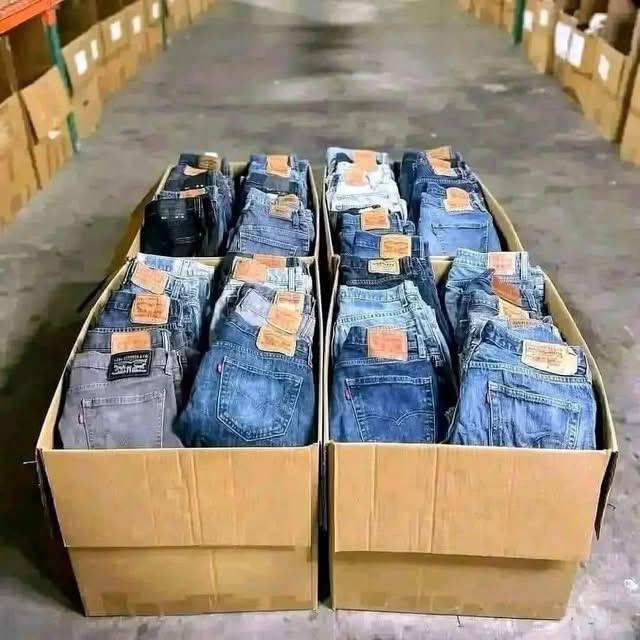
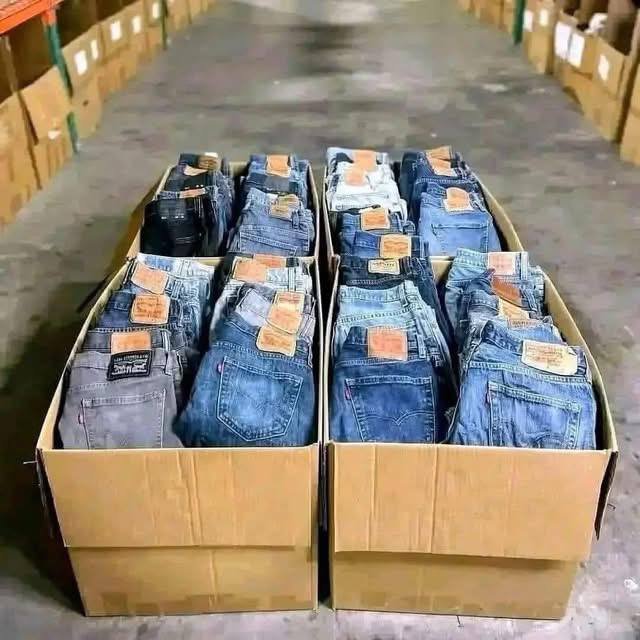
Shop Wholesale Levis Jeans Pallets with assorted styles and sizes for resellers and retailers. Explore bulk Levi’s jeans inventory and liquidation pallet options.
Wholesale Levis Jeans Pallets are an increasingly practical sourcing option for retailers, online sellers, clothing wholesalers, vintage shops, flea-market vendors, and entrepreneurs looking to build a denim business around a globally recognized brand. Instead of purchasing individual pairs at standard retail prices, buyers can acquire larger quantities of Levi’s jeans wholesale inventory and divide the merchandise into individual listings, retail collections, bundles, or smaller wholesale lots. This model can make sense because denim is a durable, versatile clothing category with many different fits, washes, sizes, and styles. Levi’s itself maintains an extensive range of fits and styles, including the well-known 501® family and other numbered fits, giving resellers plenty of product characteristics to organize and market. The official Levi’s catalog describes the 501® Original as a straight-leg style with a button fly and five-pocket construction, while its broader range includes different fits, rises, leg shapes, and stretch levels. That variety is important for anyone buying a Levi’s jeans bulk lot, because the commercial value of a pallet depends not simply on the number of pairs but also on the sizes, styles, conditions, and marketability of the inventory. A successful buyer treats a pallet as a business inventory purchase rather than a simple bargain. The objective is to acquire authentic merchandise at a workable landed cost, organize it efficiently, present it professionally, and sell it through channels where customers are actively looking for branded denim.
Levi’s has a long-standing position in the denim market, which gives resellers a recognizable brand around which they can build product listings and retail displays. The brand’s official catalog continues to feature the 501® Original alongside other fits such as 505™, 511™, 502™, relaxed styles, loose fits, and extended sizing options. This breadth creates useful opportunities for retailers because different customers shop for different silhouettes rather than one universal style. A buyer interested in Levi’s jeans for resale can therefore create a more useful assortment by separating inventory according to fit, size, wash, gender category, and condition. A pallet may contain classic straight-leg jeans, slim fits, relaxed styles, tapered designs, or other denim products, depending on the source. That variety can be turned into a strength when the inventory is properly sorted. Rather than presenting a pallet as one large unidentified collection, a retailer can transform it into organized merchandise that speaks directly to individual shoppers. Denim also lends itself well to multiple sales channels. Individual pairs can be sold online, curated collections can be displayed in a physical store, and lower-priced or used inventory can be marketed through local resale platforms. The important consideration is matching the pallet composition to the intended sales channel. A buyer who understands their customers before purchasing will generally be better positioned to turn bulk inventory into revenue than a buyer who purchases solely because the pallet price looks attractive.
One reason Levi’s denim bulk can be interesting for resellers is the depth of the product range. Levi’s uses numbered fits to distinguish characteristics such as rise, leg shape, fly style, and overall silhouette. The official Levi’s FAQ explains that its three-digit numbering system has evolved into a guide for identifying different fits and construction characteristics. For example, the 501® Original is associated with a classic straight-leg design and button fly, while other numbered styles have different silhouettes. This means that a reseller can organize a large inventory into highly searchable categories. Instead of listing every pair simply as “Levi’s jeans,” a seller can identify the model or fit when the information is available, along with the waist, inseam, wash, material, and condition. That additional detail improves merchandising and makes inventory easier to manage. It also gives customers a clearer reason to choose one pair over another. When purchasing a Levi’s jeans pallet, buyers should therefore pay attention to style diversity rather than treating every pair as interchangeable. A pallet containing a useful mixture of popular fits and practical sizes may be easier to merchandise than one containing a large quantity of highly unusual sizes or styles. Inventory composition is one of the first things a professional buyer should investigate.
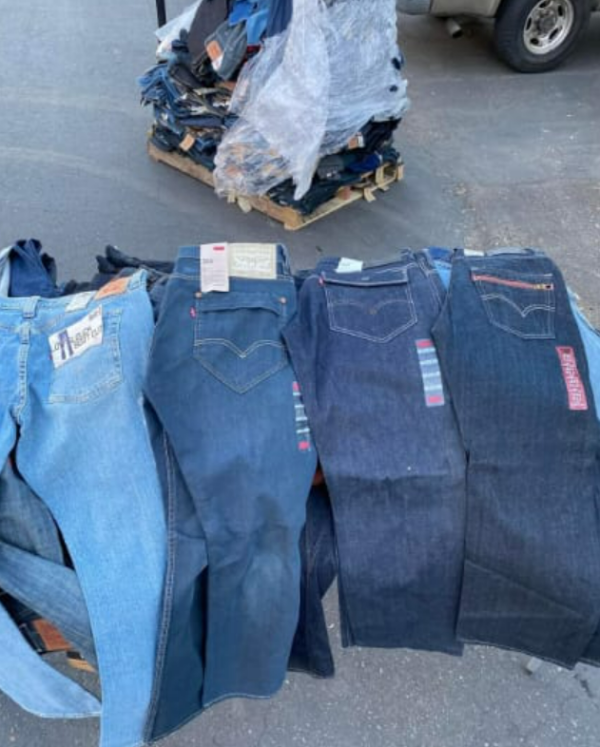
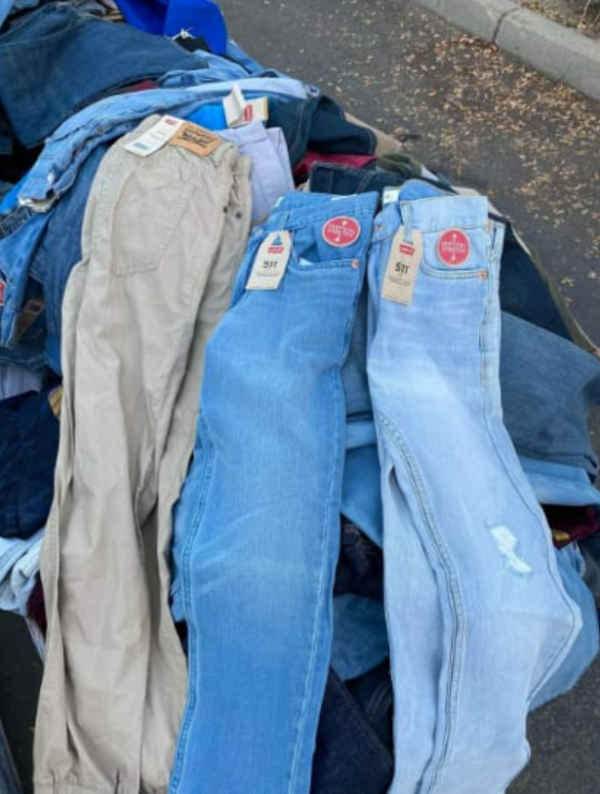
A Levi’s jeans pallet is a bulk shipment containing multiple pairs of Levi’s denim products, usually assembled for wholesale, liquidation, surplus, return, closeout, or resale purposes. The exact composition can vary considerably from one supplier to another. Some pallets may contain new or overstock merchandise, while others may contain customer returns, pre-owned denim, shelf pulls, mixed-condition products, or merchandise requiring inspection and preparation. The word “pallet” describes the quantity and logistics of the shipment; it does not automatically tell you the condition or exact contents. That distinction is critical. Before purchasing, ask whether the lot is manifested, whether the pairs have been inspected, whether sizes and styles are mixed, and whether the supplier provides photographs of the actual inventory. A professional buyer should also determine whether the pallet contains men’s, women’s, or mixed denim. If the products are used, determine how they are graded and whether stains, tears, fading, missing tags, alterations, or other defects are disclosed. A pallet can be valuable even when it contains used clothing, but the purchase price needs to reflect the additional work involved in sorting, cleaning, grading, photographing, and describing the products. The strongest buyers do not assume that a pallet is automatically profitable. They calculate what the inventory is likely to cost after transportation and processing and then compare that figure with realistic resale prices.
Condition has a major influence on the value of a wholesale denim lot. New merchandise may require less preparation and can often be marketed more directly as new, subject to the seller’s documentation and applicable marketplace rules. Overstock may also be attractive because the products can be new but no longer fit the original seller’s inventory needs. Used jeans require a different process. They should be inspected for stains, holes, excessive wear, alterations, broken zippers, damaged buttons, and other issues. Some wear can actually be desirable in the vintage or secondhand denim market, but it must be accurately described. A faded pair of 501® jeans may appeal to a customer specifically because of its worn appearance, while a different customer may want a clean, unworn pair. The important point is that condition is not simply “good” or “bad.” It affects which customer will buy the item and what price is realistic. If you Buy used Levi’s jeans pallets, create a consistent grading system so your staff can process inventory efficiently. Categories such as new, excellent used condition, good used condition, visibly worn, repairable, and unsuitable for resale can make sorting easier. The exact grading terminology can be adapted to your business, but consistency is essential.
Before purchasing Wholesale Levis Jeans Pallets, start by gathering as much information as possible about the lot. Ask for the total pair count, available sizes, men’s or women’s categories, styles, condition, photographs, location, shipping terms, and manifest if available. If the seller provides a manifest, review it rather than relying on a headline such as “high retail value.” Original retail value is not the same as expected resale revenue. A pair of jeans that originally sold at a higher retail price may command a lower secondary-market price depending on its age, condition, style, size, and current demand. The buyer should calculate a conservative expected recovery rather than using the most optimistic possible selling price. Freight also matters because denim is relatively dense and can represent significant shipping weight when purchased by the pallet. The landed cost should include the purchase price, transportation, handling, storage, cleaning or preparation, platform fees, packaging, and other business expenses. If you plan to sell individual pairs, estimate how many pairs are realistically sellable and how quickly they can move. A pallet containing 500 pairs is not automatically better than one containing 200 pairs if the larger lot contains many difficult-to-sell sizes or requires substantially more processing. Levi’s jeans wholesale pricing should therefore be evaluated alongside inventory quality and expected turnover.
Size distribution can make or break a denim pallet. A pallet containing many pairs in commercially popular sizes may be easier to sell than one heavily concentrated in sizes that your customer base does not normally purchase. This is particularly important for online retailers because every size variation creates a separate inventory position. When purchasing, ask whether the supplier can provide a size breakdown. If the pallet is mixed, request historical information when available or ask whether previous lots follow similar patterns. For retailers, knowing your existing customer demand is extremely useful. If your store regularly sells men’s waist sizes 32 through 38, a pallet heavily concentrated in those sizes may fit your business better than one containing mostly very small or very large sizes. The same principle applies to women’s sizing. A diverse size range can broaden your potential customer base, but excessive concentration in slow-moving sizes can tie up capital. If you are purchasing for an online store, use your previous sales data to identify which sizes move fastest. For a new seller without historical data, start cautiously and use early sales results to guide subsequent purchasing decisions. Size distribution is not a minor detail. It is one of the most practical indicators of how easily a clothing pallet can be converted into sales.
Authenticity is a critical issue when buying branded denim. Levi’s itself warns consumers about counterfeit products and specifically recommends purchasing from Levi.com or authorized Levi’s retailers when authenticity is uncertain. Levi’s identifies the Tab Device on the back pocket and the Arcuate Stitching Design as two trademarks associated with genuine Levi’s jeans, while also explaining that counterfeit characteristics can vary from case to case. For wholesale buyers, this makes supplier verification essential. An authentic Levi’s jeans pallet should come from a supplier that can explain the inventory source and provide reasonable documentation or information about the merchandise. Do not assume that a low price proves authenticity, and do not assume that a photograph of a red tab proves authenticity by itself. Counterfeit products can imitate visible branding, so authentication should be considered part of your purchasing process. When receiving a pallet, inspect representative samples and compare labels, stitching, tags, construction, model information, and overall product characteristics. If the source is unclear, the risk should be treated seriously. Selling counterfeit merchandise can create legal, financial, and reputational problems. A professional wholesale operation should have a documented process for verifying branded inventory before listing it for sale.
When evaluating Levi’s inventory, look at several characteristics rather than relying on a single feature. Check the back-pocket stitching, branding, labels, size information, care labels, construction quality, and style details. Levi’s official authenticity guidance specifically identifies the Tab Device and Arcuate Stitching Design as important trademarks, but these should be considered alongside the broader characteristics of the garment. Style numbers and fit information can also help you compare the product with official Levi’s product information. For example, Levi’s provides detailed descriptions of its current 501® styles, including fit, construction, fabric, and care information. This does not mean every older or vintage pair will match current specifications. Vintage denim can have historically different tags, materials, construction, and manufacturing characteristics. That is why authentication should consider the age and category of the product rather than assuming that every genuine pair must look identical to a current retail product. If your business handles large volumes, training employees to identify suspicious items before they reach the sales floor can help reduce risk. Any questionable merchandise should be isolated until its authenticity can be established.
Finding the Best suppliers for Levi’s jeans pallets requires more than searching for the lowest price. A good supplier should provide clear information about the inventory, explain condition grades, communicate shipping terms, and give buyers enough information to make a reasonable purchasing decision. Transparency is especially important for branded liquidation inventory because the buyer needs confidence in both authenticity and condition. Ask how the supplier acquired the merchandise and whether the lot is sourced from returns, overstock, closeouts, surplus, or another channel. Determine whether the photographs show the actual pallet or are representative images. Ask whether the manifest is guaranteed and whether substitutions can occur. Also ask about the supplier’s policies regarding damaged or materially misrepresented shipments. The objective is to establish a sourcing relationship that can support repeat purchases. A supplier who provides clear information and consistent inventory is often more valuable to a business than a supplier offering a slightly lower price but little documentation. When comparing Levi’s jeans liquidation pallets for sale, create a checklist and evaluate each supplier using the same criteria. That turns supplier selection into a business process instead of a guess.
A strong wholesale supplier should be able to provide basic information about the lot, including quantity, category, condition, location, and shipping arrangements. For higher-value purchases, a buyer may also want a manifest, actual inventory photographs, sample information, and a clear invoice. If the supplier cannot explain the inventory’s origin or condition, that uncertainty should influence your purchasing decision. The same applies to sellers who make unusually aggressive claims about retail value without providing product-level information. Levi’s jeans wholesale transactions work best when both sides understand exactly what is being purchased. Communication should cover whether the lot is new, used, mixed, or untested, as well as whether sizes and styles are random or specified. If you intend to make recurring purchases, ask whether the supplier can provide similar lots over time. Consistency is valuable because your retail customers expect the products you advertise. A supplier that can repeatedly provide appropriate inventory can become a strategic part of your sourcing network. On the other hand, never assume that one successful transaction guarantees that every future lot will have identical quality. Each shipment should still be reviewed against its own documentation.
Searching for Affordable Levi’s jeans liquidation deals can be an effective way to discover inventory below conventional retail acquisition costs, but “affordable” should always be defined by the complete transaction. A cheap pallet can become expensive after freight, sorting, cleaning, repairs, platform fees, and unsellable inventory are considered. The correct question is not simply how much the pallet costs. Ask how much each sellable pair will cost after all acquisition and preparation expenses. For example, if a pallet contains 300 pairs but 30 pairs require significant work and another 20 pairs are unsuitable for your sales channel, the effective cost of the remaining inventory is higher than the basic pallet price suggests. Buyers should also consider the time required to process used denim. Every pair may need to be measured, photographed, categorized, and listed individually. That labor is a business expense even when the owner performs the work personally. An affordable liquidation deal is one where the expected resale revenue provides sufficient room to cover those costs and still support the business. This is why experienced buyers calculate several scenarios before purchasing. A conservative scenario should assume lower average selling prices and a reasonable amount of unsellable or slow-moving stock. If the transaction still makes sense under that scenario, the buyer has a stronger foundation for proceeding.
Discount Levi’s jeans pallets can appeal to retailers because buying at scale may create a lower acquisition cost per pair than purchasing individual products. However, volume discounts should be evaluated against inventory turnover. If a supplier offers a lower per-pair price for a much larger pallet, the savings may not be useful if the additional inventory takes too long to sell. Cash flow matters. Money tied up in slow-moving jeans cannot easily be used to purchase your next profitable lot. A smaller pallet with a stronger size mix may therefore fit a growing business better than a much larger pallet with uncertain demand. Buyers should also consider warehouse capacity. Denim is compact compared with many other liquidation products, but hundreds or thousands of pairs still require sorting racks, bins, shelves, and workspace. If your operation is online, the labor involved in photographing and listing each pair can become significant. If you sell through a physical store, presentation and organization become equally important. Levi’s jeans bulk purchase options should therefore be evaluated based on the total business model rather than the per-pair discount alone.
Building Levi’s jeans inventory for resale requires an organized system from the moment the pallet arrives. Begin by counting the shipment and separating products according to men’s, women’s, youth, or other relevant categories. Next, sort by style or fit whenever that information is available. Then organize by waist size, inseam, condition, wash, and color. Used jeans should be inspected for stains, tears, missing buttons, broken zippers, damaged belt loops, alterations, and excessive wear. Each pair should then receive a consistent condition grade. Once sorted, create a pricing structure. High-demand styles, unusual vintage characteristics, excellent condition, and desirable sizes may justify different pricing from ordinary used inventory. The key is to avoid pricing every pair identically simply because it came from the same pallet. Customers value specific products, not the fact that the seller purchased them in bulk. A carefully sorted pallet can become a much more valuable retail assortment than the original unorganized shipment. The reseller’s job is to add structure and information. That is where a significant portion of the business value is created.
A simple inventory system can dramatically improve the efficiency of a wholesale denim business. Assign each pair an internal SKU or inventory number. Record the brand, model, size, inseam, wash, condition, acquisition cost, and listing location. For online sales, store photographs using the same SKU so employees can find the correct item after a customer orders. If a pair is moved between a warehouse and physical store, update the location. This may sound basic, but small inventory errors can become expensive when hundreds of pairs are involved. A structured system also helps you determine which styles are selling and which are sitting in storage. After several months, you can analyze average selling price by style, size, condition, and acquisition cost. That information can then influence future Levi’s jeans bulk lot purchases. If 501® jeans consistently sell faster than other styles, you can look for pallets with a stronger 501® mix. If certain sizes consistently remain unsold, you can adjust the amount you are willing to pay for pallets dominated by those sizes. Your own sales data becomes a sourcing tool.
A practical Levi’s jeans pallet buying guide should begin with six questions: What is the exact product? What is the condition? How many pairs are included? What sizes and styles are represented? What is the total delivered cost? Where will the inventory be sold? These questions create the foundation for a rational purchase. After that, investigate the supplier, request documentation, review photographs, and calculate realistic resale prices. Do not use original retail prices as guaranteed revenue. Instead, examine comparable used and new products in the actual condition you expect to receive. If the lot is used, determine whether the jeans require cleaning or repairs. If the lot is new, determine whether the seller can substantiate the condition and inventory source. If the pallet is mixed, determine whether the composition is random or documented. Buyers should also establish a maximum purchase price before negotiating or bidding. Once that number is calculated, stick to it. A common mistake is becoming emotionally committed to a pallet and gradually increasing the purchase price because the buyer does not want to lose the opportunity. A professional buyer understands that there will always be another pallet. Protecting capital is more important than winning a single transaction.
Before purchasing, verify the following:
Finding Levi’s jeans pallet deals is only the beginning. The real opportunity is determining whether the deal fits your business. A pallet advertised at a low price can be less attractive than a slightly more expensive pallet containing better sizes, newer styles, or cleaner merchandise. Consider the difference between acquisition price and realized revenue. If one pallet costs $3,000 and produces $6,000 in gross sales while another costs $2,000 and produces $3,000, the cheaper pallet is not automatically the stronger commercial purchase. You also need to account for labor and time. If the second pallet requires twice as much sorting, cleaning, and listing, its apparent discount becomes less meaningful. Reselling tips for Levi’s jeans pallets therefore begin with understanding your own operation. Know how much your staff can process per day, how many listings you can publish, how much warehouse space you have, and how quickly customers purchase different styles. Use those numbers to determine how much inventory you can responsibly acquire. A good deal is one that fits your capacity. A great-looking pallet that overwhelms your operation can create cash-flow problems and warehouse congestion.
A Levi’s jeans liquidation warehouse can be a valuable sourcing option because physical inspection may provide information that online listings cannot. If inspection is available, examine representative pairs from different sections of the pallet rather than checking only the top layer. Look at condition, sizing, tags, stitching, washes, and signs of damage. Ask whether the warehouse permits buyers to inspect before purchasing or whether lots are sold strictly as-is. If you are local, pickup can also reduce freight costs and allow you to develop a relationship with the supplier. However, a physical warehouse is not automatically superior to an online supplier. The same due diligence should apply. Confirm the seller’s business information, purchasing terms, inventory source, and condition descriptions. A warehouse visit is most useful when it gives you better information about the actual merchandise. Take notes about which styles and sizes appear most frequently and whether the inventory matches the advertised description. If you plan recurring purchases, record your observations and compare them with the results of previous lots. Over time, this can help you identify suppliers whose inventory consistently fits your business.
Levi’s jeans surplus shipping can represent a meaningful part of the total acquisition cost, particularly for large pallets traveling across long distances. Denim is dense and can become expensive to transport when the shipment is large. Before purchasing, obtain the complete shipping quote rather than estimating based on a rough distance. Ask whether the quoted freight includes residential delivery, liftgate service, appointment delivery, or other applicable charges. If you operate a warehouse with a loading dock or forklift, explain that to the carrier or supplier because delivery requirements can affect the cost. Buyers should also confirm the pallet dimensions and weight because these factors influence freight. For international buyers, additional considerations can include customs requirements, duties, taxes, documentation, and import restrictions. The correct landed cost should include all predictable expenses before the purchase is approved. If you sell individual jeans online, remember that you will also have outbound shipping costs. If you sell cases or wholesale lots, your customers may pay freight, but your pricing should still account for your handling and fulfillment expenses. Logistics should be part of the purchase calculation from the beginning rather than an afterthought.
Understanding Levi’s jeans wholesale pricing requires separating three different concepts: acquisition price, market resale price, and realized profit. Acquisition price is what you pay for the pallet. Market resale price is what comparable jeans are currently selling for. Realized profit is what remains after all business costs are deducted. These numbers can be very different. A pair of jeans may have a strong retail reputation, but used or liquidation inventory may sell at a different price. The condition, model, size, wash, age, and selling platform all influence the final amount. Levi’s official catalog demonstrates the variety within its own product range, meaning two pairs bearing the same brand name can have very different characteristics. This is why buyers should research the specific products in a pallet rather than assigning one average value to every pair. For new merchandise, compare current retail and wholesale alternatives. For used merchandise, compare actual secondhand listings and completed sales where reliable data is available. Then apply a conservative recovery rate to the pallet. If your expected margin disappears when the average selling price falls modestly, the purchase may be too aggressive. Good wholesale pricing begins with realistic assumptions.
There is a significant market for secondhand denim, making Buy used Levi’s jeans pallets a useful search term for vintage stores, thrift retailers, online sellers, and clothing resellers. Used Levi’s jeans can offer variety in washes, fading, construction, and historical styles. Levi’s itself highlights vintage 501® jeans and other heritage products in its own consumer information, including characteristics associated with older denim. This means a reseller should not automatically treat every sign of age as a defect. In vintage denim, fading, wear patterns, older tags, and construction details can be part of the product’s appeal. At the same time, sellers must describe condition honestly. A hole that is marketed as intentional distressing when it is actually damage can create customer dissatisfaction. Used inventory should therefore be photographed carefully, measured accurately, and described in detail. Measurements are particularly important because vintage and used sizing can differ from modern expectations. Listing only the tagged size may not be enough for online customers. Include waist, inseam, rise, thigh, and leg opening measurements where practical. This information helps customers make better decisions and can reduce returns.
The phrase Refurbished Levi’s jeans pallets for resale can describe merchandise that has been cleaned, repaired, altered, or otherwise prepared for resale, although the exact meaning depends on the supplier. Buyers should ask precisely what “refurbished” means before purchasing. For clothing, preparation may involve washing, stain treatment, mending, replacement buttons, zipper repair, hemming, or other work. A professionally restored pair can be more marketable than a damaged pair, but the cost of refurbishment needs to be included in the purchase calculation. If you purchase used denim that requires extensive repairs, calculate the labor and materials before determining its value. A repair that costs $10 may make sense on a pair expected to sell for $50 but may not make sense on a pair expected to sell for $20. The same principle applies to cleaning. Commercial laundering can add a meaningful per-pair cost when processing hundreds of items. Resellers should therefore establish a standard threshold for repairs and cleaning. Inventory below that threshold can be sold as-is if accurately described, while better candidates can be refurbished for a higher selling price. The best process depends on your customer base and operating costs.
The search for Cheap Levi’s jeans for resale should focus on margin rather than the lowest possible acquisition price. Cheap inventory can be valuable when it is authentic, sellable, and aligned with customer demand. It can also become expensive if it contains a high percentage of damaged or difficult-to-sell products. When purchasing, calculate the expected average cost per sellable pair rather than the nominal cost per pair in the pallet. If a pallet contains 400 pairs at $2,000, the nominal acquisition cost is $5 per pair. But if 50 pairs are unsellable and another 50 require $5 of average preparation, the actual economics are very different. This is why a professional reseller uses a conservative recovery model. The model should account for defects, processing, platform fees, packaging, returns, and slow-moving stock. You can then compare the expected realized revenue against the total cost. The strongest opportunities are often those where the inventory has multiple paths to market. For example, premium pairs can be sold individually, ordinary pairs can be offered at standard retail prices, and lower-grade merchandise can be bundled or sold through secondary channels. Multiple exit strategies reduce the dependence on one selling channel.
Levi’s jeans pallets bulk lots can be divided into multiple sales categories, allowing a retailer to create a more flexible merchandising strategy. Premium pairs can receive detailed individual listings with measurements and multiple photographs. Standard pairs can be grouped into collections by size or style. Used inventory can be marketed through secondhand channels, while damaged pieces may be sold to upcyclers, textile artists, or repair businesses where appropriate. The important thing is to avoid treating every pair as identical. A pallet is a collection of individual products with different levels of commercial value. Sorting creates the opportunity to capture that difference. A retailer can also create themed collections, such as classic straight fits, vintage denim, relaxed fits, or larger-size selections, depending on the actual inventory. These collections can make a large quantity of jeans easier for customers to navigate. Online stores benefit from clear filters and accurate product data. Physical stores benefit from organized racks and signage. The more effectively the reseller organizes the inventory, the easier it becomes for customers to discover products that fit their needs.
Liquidation sales for Levi’s jeans can occur when businesses need to clear excess inventory, customer returns, discontinued products, seasonal stock, or other merchandise. For buyers, liquidation can create access to inventory at prices below conventional wholesale channels, but the tradeoff is often greater uncertainty about condition or assortment. This is why the buyer’s due-diligence process matters so much. Ask why the inventory is being liquidated, what condition it is in, and whether the seller can provide a manifest or detailed description. If the lot contains older styles, consider whether those styles still have demand in your target market. If it contains used denim, consider the labor required to prepare the merchandise. If it contains new products, verify that the condition is accurately represented. A liquidation purchase should be evaluated on its own merits. Do not assume that a product is a good deal simply because the seller says it was previously sold at a higher retail price. Compare the acquisition cost with realistic current resale prices. This discipline is especially important when dealing with well-known brands because brand recognition can make headline values appear more attractive than actual market conditions justify.
When you Order Levi’s jeans pallet liquidation, make sure the order details are documented before payment. The invoice or order confirmation should identify the product category, quantity, agreed price, shipping terms, and any important condition information. If a manifest is part of the agreement, retain a copy. If photographs represent the actual inventory, save those photographs with your order records. This documentation creates a clear reference point if the shipment later differs materially from what was represented. Buyers should also confirm the destination address, receiving requirements, and estimated delivery process. If your warehouse requires an appointment or has specific unloading equipment, communicate those requirements before shipment. Once the pallet arrives, inspect it promptly. Count the cartons or pairs and compare the shipment with the order documentation. Document visible damage before moving the merchandise into storage. For recurring wholesale buyers, maintain a record of every supplier transaction. This allows you to compare performance over time and identify suppliers that consistently meet expectations. A professional purchasing process protects your capital and makes scaling much easier.
The decision to Purchase Levi’s jeans pallet liquidation should be based on numbers, not urgency. Before committing, determine your maximum acceptable acquisition cost. Start with estimated resale revenue and subtract expected processing costs, freight, platform fees, packaging, storage, and an allowance for unsold or defective products. The remaining amount represents the maximum amount you can spend while preserving your target economics. This calculation should be conservative. If the pallet only works when every pair sells at the highest possible price, the purchase is too dependent on optimistic assumptions. Instead, build a realistic average selling price and recovery rate based on comparable inventory. If you have previous pallet data, use it. Your own sales history is more useful than generic claims because it reflects your actual customers and selling channels. If you are new, use multiple market references and begin with a smaller purchase. Once you have established your typical sell-through rate and processing cost, you can increase order volume with greater confidence. Scaling should be the result of measured performance rather than excitement about a large pallet.
The question Where to buy Levi’s jeans liquidation pallets has no single answer because the appropriate supplier depends on location, budget, inventory requirements, and preferred condition. Potential sourcing channels can include liquidation warehouses, clothing wholesalers, closeout distributors, auctions, business-to-business marketplaces, and other apparel liquidation sources. Buyers should compare suppliers using consistent criteria. Look at inventory documentation, authenticity information, condition, size mix, photographs, shipping, payment requirements, and customer-service policies. If possible, inspect physical inventory before making a large purchase. Online buyers should request actual photographs and ask detailed questions about the lot. Be especially careful with sellers who provide vague descriptions such as “designer jeans” or “brand-name denim” without identifying the exact brand and condition. If your business depends on authentic Levi’s merchandise, brand identification should be explicit in the transaction documents. Building relationships with multiple suppliers can also reduce sourcing risk. One supplier may have new overstock while another specializes in used or vintage denim. Having more than one source gives your business greater flexibility when inventory availability changes.
The market for wholesale denim jeans USA sourcing can include new, overstock, closeout, returned, and used merchandise. For buyers specifically looking for Levi’s, the goal should be to identify suppliers capable of providing authentic merchandise that fits your resale model. Domestic sourcing can offer logistical advantages for U.S.-based businesses, including shorter delivery distances and simpler receiving arrangements, although costs vary by supplier and location. Buyers should compare the full landed cost rather than assuming domestic sourcing is automatically cheaper. For international resellers, U.S.-based liquidation can also be attractive, but freight, customs, duties, taxes, and import requirements must be considered. Denim is a relatively dense product, so transportation can become an important part of the total cost. If you operate internationally, calculate the cost per sellable pair after all import expenses. The same principle applies whether you are purchasing 50 pairs or several pallets. The goal is to know your true cost before setting resale prices. Wholesale sourcing works best when the supply chain is predictable and the inventory can be processed quickly.
Successful Reselling tips for Levi’s jeans pallets start with organization. Photograph inventory consistently, record accurate measurements, identify model numbers where available, and disclose flaws. Do not use generic descriptions when individual product details can be provided. A customer shopping for a pair of 501® jeans may care about waist size, inseam, wash, rise, leg opening, stretch, and condition. Levi’s official product information provides detailed fit characteristics for its styles, illustrating how much product information can be relevant to denim shoppers. For used jeans, measurements are especially useful because actual garment dimensions may differ from expectations based on the tag. Pricing should reflect the specific pair rather than simply applying one price to an entire pallet. Consider creating tiers based on condition, rarity, style, and demand. Also experiment with different sales channels. Some pairs may perform better through an online marketplace, while others may move faster through a physical store or social-commerce channel. Track the results. Your sales data will tell you which styles, sizes, conditions, and price points deserve more inventory in your next purchase.
Wholesale Levis Jeans Pallets can provide a practical foundation for retailers, online sellers, wholesalers, vintage shops, and entrepreneurs who want to build a denim business around a recognizable brand. The opportunity comes from purchasing inventory in volume, organizing it intelligently, and matching individual products with customers who value the brand, fit, style, and condition. Levi’s offers a broad range of fits and styles, with the 501® Original remaining one of the brand’s most recognizable designs. That variety creates opportunities for resellers, but it also means every pallet should be evaluated carefully.
The best approach is to treat a Levi’s jeans pallet as a business investment. Verify authenticity, inspect condition, understand the size and style distribution, calculate freight, determine your landed cost, and establish a realistic resale strategy before purchasing. Whether you are searching for Affordable Levi’s jeans liquidation deals, Discount Levi’s jeans pallets, Levi’s jeans liquidation pallets for sale, or Levi’s jeans bulk purchase options, the same principles apply. The cheapest pallet is not necessarily the most profitable pallet. A better purchase is one containing authentic, marketable merchandise that fits your customers and can be processed efficiently.
For buyers considering Levi’s jeans wholesale, careful sourcing can create opportunities across multiple sales channels. New and overstock merchandise can be positioned differently from used or vintage denim, while lower-grade inventory can be routed toward appropriate secondary markets. If you are planning Levi’s denim bulk purchases, use your sales data to determine which sizes, fits, conditions, and price points perform best. Build relationships with reliable suppliers, document every transaction, and increase purchasing volume only when your operation can handle the additional inventory.
Ultimately, successful denim liquidation is about turning bulk inventory into organized retail value. A pallet arrives as a large collection of garments. Your job as the reseller is to transform that collection into accurately categorized, authentic, well-presented products that customers can understand and purchase with confidence. When sourcing, inspection, pricing, logistics, and merchandising are handled professionally, Levi’s jeans for resale can become a scalable part of a broader wholesale clothing business.
Wholesale Levis Jeans Pallets are bulk shipments containing multiple pairs of Levi’s jeans intended for wholesale, liquidation, resale, or distribution. The exact contents can vary by supplier and may include new, overstock, used, returned, or mixed-condition merchandise. Buyers should always verify the quantity, condition, sizes, styles, authenticity, and shipping terms before purchasing.
Start by purchasing from a supplier that can explain the inventory source and provide detailed information about the lot. Inspect representative merchandise when possible. Levi’s official authenticity guidance identifies the Tab Device and Arcuate Stitching Design as trademarks associated with genuine products, while also warning that counterfeit products exist. For larger purchases, establish a documented authentication process before listing the inventory.
Used Levi’s jeans can be suitable for resale when the inventory is authentic, appropriately priced, and aligned with your customers. Used denim should be inspected, measured, graded, photographed, and accurately described. Vintage characteristics can sometimes be valuable, but damage and wear should never be misrepresented. Your purchase price should account for cleaning, repairs, labor, and the expected percentage of inventory that may not sell.
Check authenticity, quantity, size distribution, style mix, condition, photographs, manifest information, supplier reputation, shipping cost, and payment terms. Calculate the complete landed cost and compare it with realistic resale prices. If the pallet is used, estimate cleaning and repair costs. If it is new or overstock, verify the condition and documentation. Establish your maximum purchase price before completing the transaction.
Yes, bulk denim can be processed for online resale, but each pair should be accurately documented. Record the model or fit, waist, inseam, wash, condition, measurements, and relevant details. High-quality photographs and transparent descriptions are particularly important for used clothing. An organized inventory system will also help you locate individual pairs quickly after an online customer places an order.
WhatsApp us
Get 10% off orders of $200 or more when you choose Zelle, Cash App, or Chime during checkout.
How it works: Your discount is automatically applied after you choose an eligible payment method at checkout.
Minimum product subtotal: $200. Credit-card orders remain at standard listed price. One promotion per order.

Reviews
There are no reviews yet.